Okay, imagine this: you’re at a wedding. Beautiful flowers, questionable dance moves, and Uncle Jean-Pierre is already three glasses of wine deep and giving relationship advice to the teenagers. He’s going on about finding “the one,” the importance of commitment, blah blah blah. You’re rolling your eyes, thinking, “Easy for you to say, Uncle Jean-Pierre, you’ve been married to Aunt Monique for fifty years!” But actually, his ramblings, in a slightly tipsy and irritating way, touch upon something really fundamental: the right to marry and found a family. And that, my friends, is where Article 12 of the European Convention on Human Rights comes into play.
Think of Article 12 as the boring-but-essential chaperone at the wedding party of human rights. It’s not as flashy as freedom of speech or as dramatic as the right to a fair trial, but it lays the groundwork for something incredibly personal and important: your right to tie the knot and, if you so choose, pop out some little humans (or adopt, obviously!).
Article 12: The Text Itself (Because We Have To)
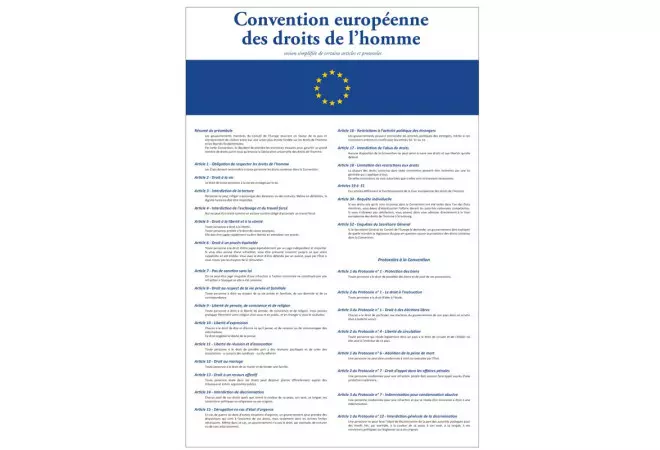
Alright, let’s get the official wording out of the way. (Don’t worry, I promise to make it painless!). Article 12 states:
“Men and women of marriageable age have the right to marry and to found a family, according to the national laws governing the exercise of this right.”
See? Not exactly poetry, is it? But break it down, and it’s actually quite powerful. It’s saying that, generally speaking, if you’re old enough and your country’s laws allow it, you have the right to get married. And, crucially, to start a family if you want to.
Quick side note: Notice that bit about “national laws”? That’s where things get interesting (and sometimes a little complicated). We’ll get to that later.
What Does “Marriageable Age” Actually Mean?
This is where those national laws come into play. Article 12 doesn’t specify a magic number for “marriageable age.” That’s left up to each individual country to decide. So, what’s legal in France might be different from what’s legal in, say, Sweden or Poland.

In most European countries, the marriageable age is 18. However, there can be exceptions, sometimes with parental consent or judicial authorization, for younger individuals. It’s all about balancing the right to marry with the need to protect vulnerable individuals.
Food for thought: Should there be a universally agreed-upon marriageable age across Europe? It’s a debate worth having, isn’t it?
“According to National Laws”: The Caveats and Controversies
Okay, remember that “according to national laws” bit? That’s where things can get a bit… sticky. Because while Article 12 guarantees the right to marry, it also acknowledges that countries can impose certain restrictions. These restrictions, however, must be justified and proportionate.
What kind of restrictions are we talking about? Well, things like:

- Age restrictions: As we’ve already discussed.
- Restrictions based on blood relations (incest): Pretty standard stuff.
- Restrictions on polygamy: Most European countries prohibit polygamous marriages.
- Residency requirements: Some countries might require you to be a resident for a certain period before you can get married there.
But the really thorny issues arise when national laws are used to discriminate against certain groups. For instance, historically, many countries banned same-sex marriage. Article 12 itself doesn’t explicitly address same-sex marriage, which led to some legal battles.
Article 12 and Same-Sex Marriage: A Long and Winding Road
The European Court of Human Rights (ECtHR) has dealt with numerous cases concerning same-sex couples and their right to marry. While the Court has never explicitly stated that Article 12 requires countries to legalize same-sex marriage, it has consistently held that denying same-sex couples legal recognition of their relationships can violate other articles of the Convention, such as Article 8 (the right to private and family life) and Article 14 (the prohibition of discrimination).
In essence, the ECtHR has said that while countries aren’t forced to call it “marriage,” they can’t simply ignore same-sex relationships and deny them legal rights and protections equivalent to those enjoyed by heterosexual couples.
As a result, many European countries have legalized same-sex marriage, either through legislative action or court rulings. Others have opted for civil partnerships or other forms of legal recognition. The landscape is constantly evolving, and it’s a testament to the power of human rights law to challenge discriminatory practices.
Think about it: The interpretation of Article 12 has changed dramatically over time, reflecting societal shifts and evolving understandings of equality.
Founding a Family: More Than Just Babies
Article 12 also guarantees the right to “found a family.” Now, that doesn’t just mean having biological children. It encompasses a broader range of family-building options, including adoption and assisted reproductive technologies (ART).
The ECtHR has recognized that states have a certain degree of discretion in regulating ART, but they must do so in a way that respects individuals’ rights to private and family life. This means that restrictions on ART must be justified and proportionate, and they can’t be discriminatory.
Adoption is another area where Article 12 plays a role. While national laws govern adoption procedures, the ECtHR has held that states must act in the best interests of the child and ensure that adoption laws don’t discriminate against potential parents based on factors like sexual orientation.

Why Article 12 Matters (Even If It Sounds Boring)
So, why should you care about Article 12? Because it protects a fundamental aspect of human life: the right to form intimate relationships and build a family. It’s about autonomy, self-determination, and the freedom to live your life according to your own values and choices.
Article 12, while seemingly simple, has been instrumental in advancing LGBTQ+ rights, challenging discriminatory practices, and ensuring that everyone has the opportunity to experience the joys and challenges of family life.
It’s a reminder that human rights aren’t just abstract concepts; they’re real, tangible protections that affect our everyday lives. And even though Uncle Jean-Pierre might not know the first thing about the European Convention on Human Rights, his tipsy wedding speech (however annoying) ultimately touched upon the very core of what Article 12 aims to protect.
And that, my friends, is why Article 12, despite its perceived “boringness”, is actually pretty damn important.