Bonjour mes chéris! Ready for a little constitutional cuisine? Today, we’re diving into the deep, sometimes murky, but always fascinating waters of Article 11 of the French Constitution. Don’t worry, I promise it won’t be as dry as a baguette left out overnight. We’ll add a little beurre and confiiture to make it palatable. Think of me as your constitutional sommelier, guiding you through the notes of legislative prose with a wink and a smile. Allez, on y va!
Article 11: The People’s Choice… Maybe?
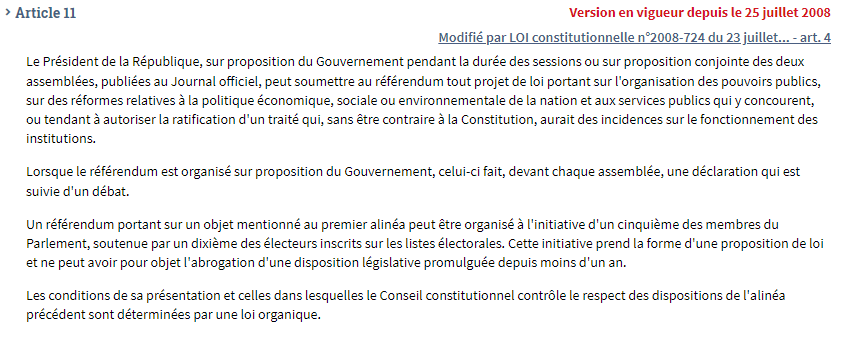
So, what is Article 11 all about? In a nutshell, it’s about giving the French people a more direct say in how things are run. Imagine it as a shiny, democratic button labeled “Referendum!” It allows the President, on the proposal of the government or Parliament, to submit certain types of bills to a popular vote. Sounds simple enough, right? Well, hold your horses – or should I say, your chevaux? The devil, as always, is in the details.
The Referendum Revolution: A Brief History
France has a long and, shall we say, passionate relationship with referendums. From Napoleon’s plebiscites to De Gaulle’s grand pronouncements, the referendum has been used to confirm power, reshape the Republic, and generally keep everyone on their toes. Article 11, as we know it today, is a more recent iteration, designed to be a bit more…controlled. Because, let’s face it, giving the French people too much direct power? Sacrebleu! That could lead to all sorts of delightful chaos!
Think of it like this: Article 11 is the government saying, “Okay, okay, we’ll let you vote, but only on these things, and only if we say so.” It’s a bit like letting a toddler “help” bake a cake. You give them a spoon and some sprinkles, but you keep a close eye on them to make sure they don’t end up eating all the batter.
What Can Be Put to a Referendum? The Fine Print
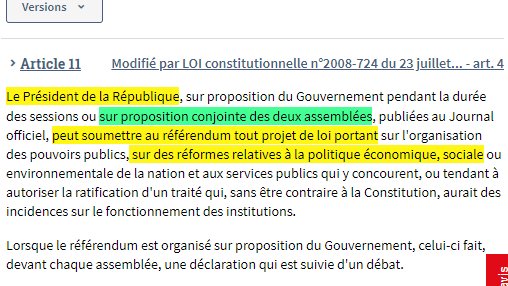
Now, let’s get down to the nitty-gritty. What kind of laws can be subjected to the referendum treatment under Article 11? According to the text, it’s mainly about the organization of public authorities and bills that “affect the economic, social or environmental policy of the Nation.”
Here’s a slightly less dry breakdown:
- Organization of Public Authorities: Think changes to how the government is structured, like merging regions or tweaking the powers of different branches. Basically, anything that could potentially ruffle feathers in the political establishment.
- Economic Policy: Anything related to the economy, from tax reforms to privatization of state-owned companies. Prepare for passionate debates and possibly strikes!
- Social Policy: Hot-button issues like pension reform, healthcare, or immigration. These are the topics that really get the French riled up – and rightly so!
- Environmental Policy: Measures aimed at protecting the environment, such as renewable energy targets or restrictions on pollution. A topic increasingly important, but still often debated.
Notice anything missing? That’s right! Constitutional amendments. Those are handled separately under Article 89, which involves a different process (and arguably, even more political wrangling). So, if you were hoping to vote on abolishing the Senate or declaring the baguette a national treasure (a cause I would gladly support), you’re out of luck… for now.
The Presidential Prerogative: The Power to Propose (or Not)
Here’s where things get interesting. Article 11 gives the President a significant amount of power. The President is the one who ultimately decides whether or not to propose a bill for a referendum. They can do so on the proposal of the government (i.e., the Prime Minister) or on a joint motion of both houses of Parliament.
Think of the President as the gatekeeper of the referendum. They hold the keys to the democratic kingdom, and they get to decide who gets in. It’s a pretty sweet deal, if you’re the President.
But there are checks and balances, of course! (This is France, after all. We love our checks and balances, even if we sometimes ignore them.) The Constitutional Council – that august body of legal eagles – has to sign off on the proposal to make sure it’s all above board. They’re the referees of the constitutional game, blowing the whistle if anyone tries to cheat.
Article 11 in Action: A Few Real-World Examples
So, how has Article 11 actually been used in practice? Well, the track record is… mixed. It hasn’t been used all that often, and when it has, it’s often been met with controversy.

Here are a few notable examples:
- De Gaulle’s Referendums: Charles de Gaulle was a big fan of the referendum. He used it to approve everything from Algerian independence to constitutional reforms. Some saw it as a legitimate way to consult the people, while others accused him of bypassing Parliament and wielding too much power.
- The 2000 Referendum on the Presidential Term: This referendum, initiated by President Chirac, shortened the presidential term from seven years to five. It was a relatively uncontroversial measure, and it passed easily.
- Failed Attempts: Many Presidents have floated the idea of using Article 11 for various issues, but ultimately decided against it. This could be due to political calculations, fears of losing, or simply a lack of consensus.
The relative infrequency of Article 11 referendums highlights a key point: they are politically risky. A President who loses a referendum suffers a major blow to their authority. It’s like hosting a party and nobody shows up. Awkward!
The Controversy and the Criticism: Is Article 11 Truly Democratic?
Here’s where the debate really heats up. Critics of Article 11 argue that it’s not as democratic as it seems. They point out that the President has too much control over the process, and that referendums can be easily manipulated for political gain.
Some common criticisms include:
- Presidential Control: The President’s power to decide which issues go to a referendum gives them a huge advantage. They can choose issues that they know are likely to win, or that will boost their popularity.
- Oversimplification: Complex issues are often reduced to simple “yes” or “no” questions, which can be misleading and fail to capture the nuances of the debate. It’s like trying to summarize the entire history of France in a tweet.
- Low Voter Turnout: Referendums often suffer from low voter turnout, which can undermine their legitimacy. People may feel disengaged, uninformed, or simply too busy to participate.
- Erosion of Parliamentary Power: Some argue that referendums bypass Parliament and weaken its role in the legislative process. It’s like inviting your neighbor to cook dinner when you already have a perfectly good chef (the Parliament) in the kitchen.
Defenders of Article 11, on the other hand, argue that it’s a valuable tool for direct democracy. They say that it allows the people to have a more direct say in important decisions, and that it can help to legitimize government policy.

They might argue that:
- Direct Democracy: It provides a direct link between the government and the people, allowing citizens to express their views on key issues.
- Legitimacy: A successful referendum can give a government mandate and strengthen its position.
- Public Engagement: It encourages public debate and raises awareness of important issues.
- Accountability: It holds politicians accountable to the people and forces them to explain their policies.
The truth, as always, probably lies somewhere in the middle. Article 11 has the potential to be a powerful tool for democratic engagement, but it also has the potential to be abused for political purposes. It all depends on how it’s used.
The Future of Article 11: A Crystal Ball Gazing Session
So, what does the future hold for Article 11? Will it become a more frequently used tool for direct democracy, or will it remain a relatively obscure provision of the Constitution?
Predicting the future is always a risky business, but here are a few possible scenarios:
- More Frequent Use: As trust in traditional political institutions declines, there may be increasing pressure to use referendums to give the people a more direct say.
- Targeted Use: Presidents may become more strategic in their use of Article 11, using it only for issues that are likely to win public support, or to distract from more pressing problems.
- Reform: There may be calls to reform Article 11 to address some of the criticisms outlined above, such as limiting the President’s power or setting stricter rules for referendums.
- Continued Obscurity: Article 11 may simply continue to languish in the constitutional shadows, rarely used and largely forgotten.
Ultimately, the fate of Article 11 will depend on the political climate and the priorities of future Presidents. But one thing is certain: the debate over direct democracy is not going away anytime soon.
A Few Parting Thoughts (and a Final Clin d’Oeil)
Well, mes amis, we’ve reached the end of our constitutional journey. I hope you’ve found this little exploration of Article 11 to be both informative and entertaining. Remember, the Constitution is not just a dry legal document – it’s a living, breathing thing that shapes our society and our lives. It’s worth understanding, even if it sometimes feels like trying to decipher ancient hieroglyphics.
And now, for a final thought to ponder: Article 11 is a bit like that fancy cheese you bring out at a dinner party. It looks impressive, and everyone is curious about it, but you’re never quite sure if anyone will actually eat it. And if they do, will they like it? Or will they wrinkle their noses and ask for something a little more… predictable?
So, the next time you hear someone talking about Article 11, you can impress them with your newfound knowledge. And if they ask you what you think about it, you can just smile knowingly and say, “Ah, Article 11… it’s complicated.” Then wink, and walk away. You’ll be the most interesting person at the party, c’est garanti!
À bientôt, et vive la République!