Okay, picture this: you’re at a slightly awkward dinner party. The conversation’s lulling, someone just spilled red wine on the tablecloth (classic!), and suddenly, Uncle Bernard launches into a passionate defense of… monarchy. Yep. Monarchy. “But think of the stability!” he booms, crumbs flying everywhere. You roll your eyes internally. Where’s a good revolution when you need one?
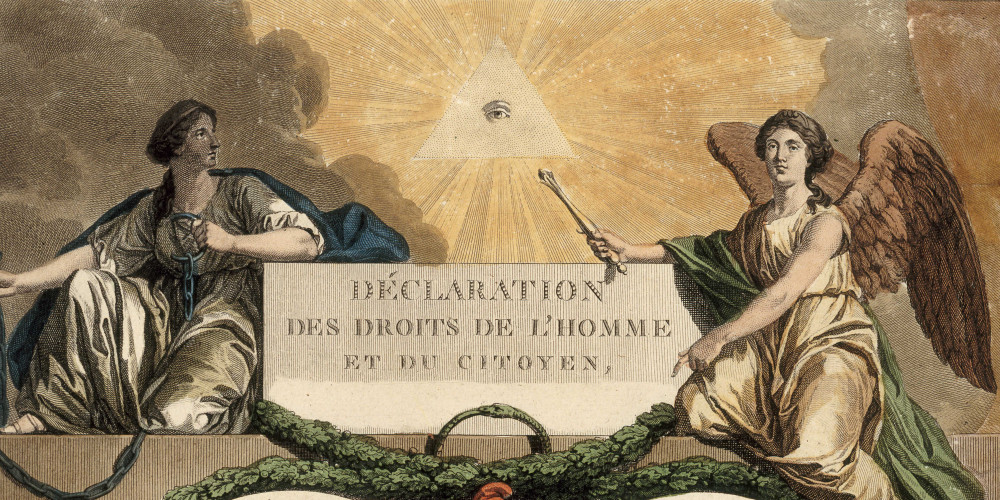
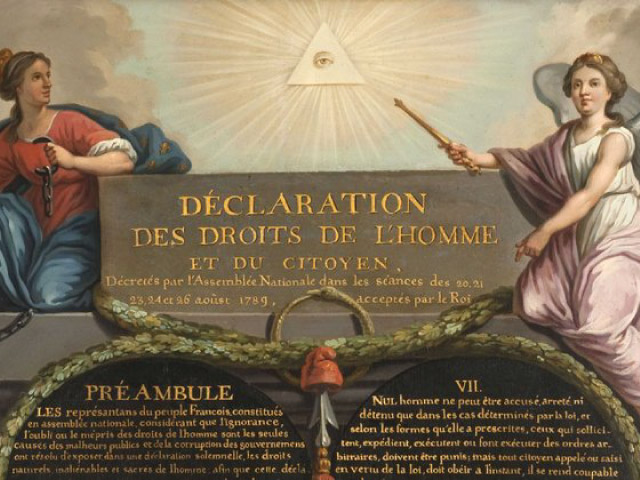
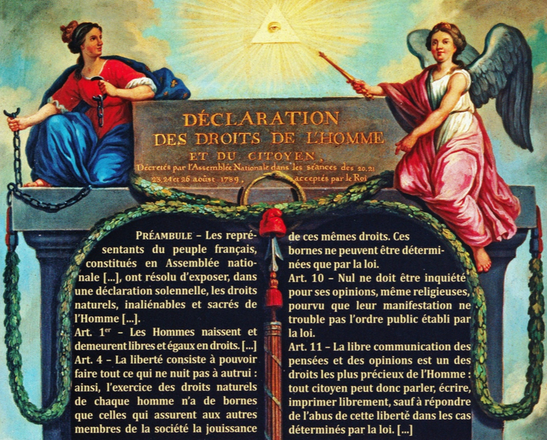
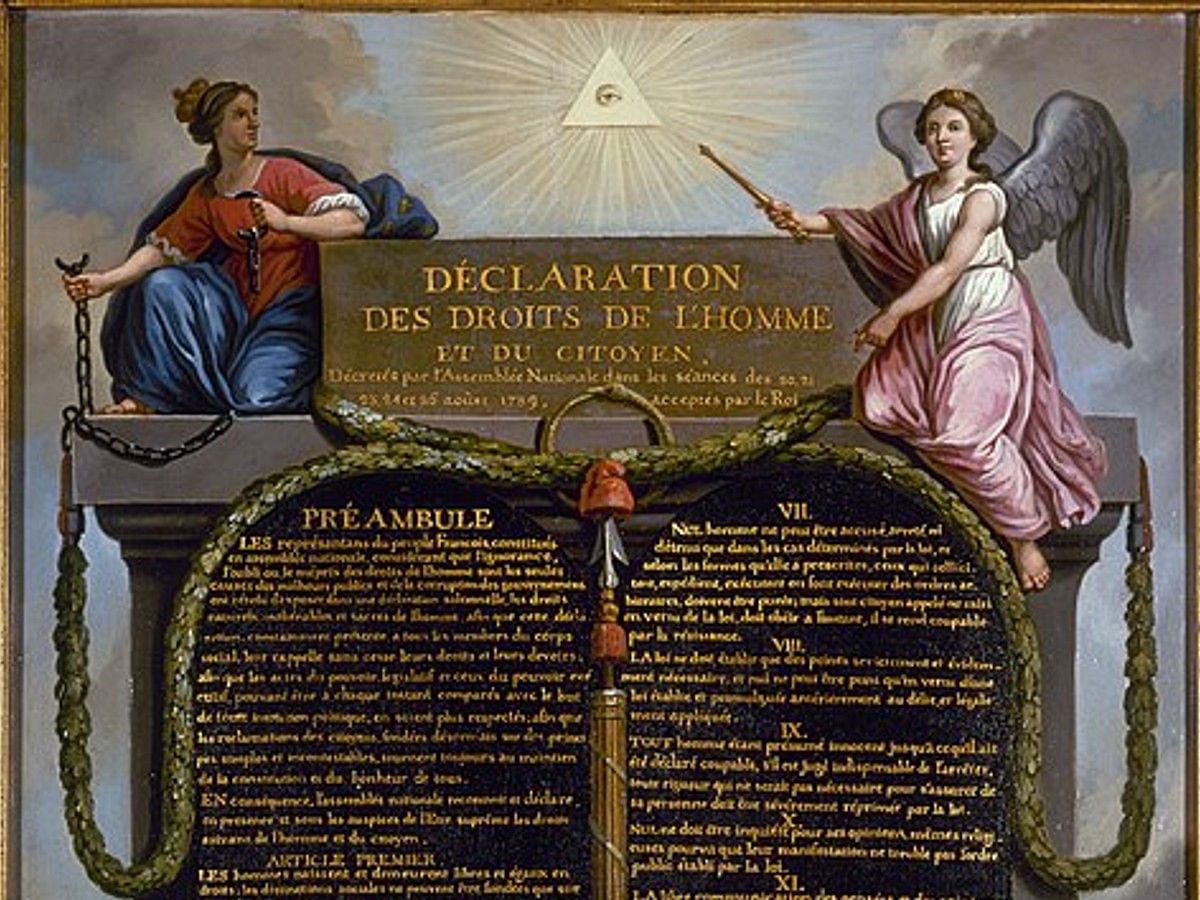
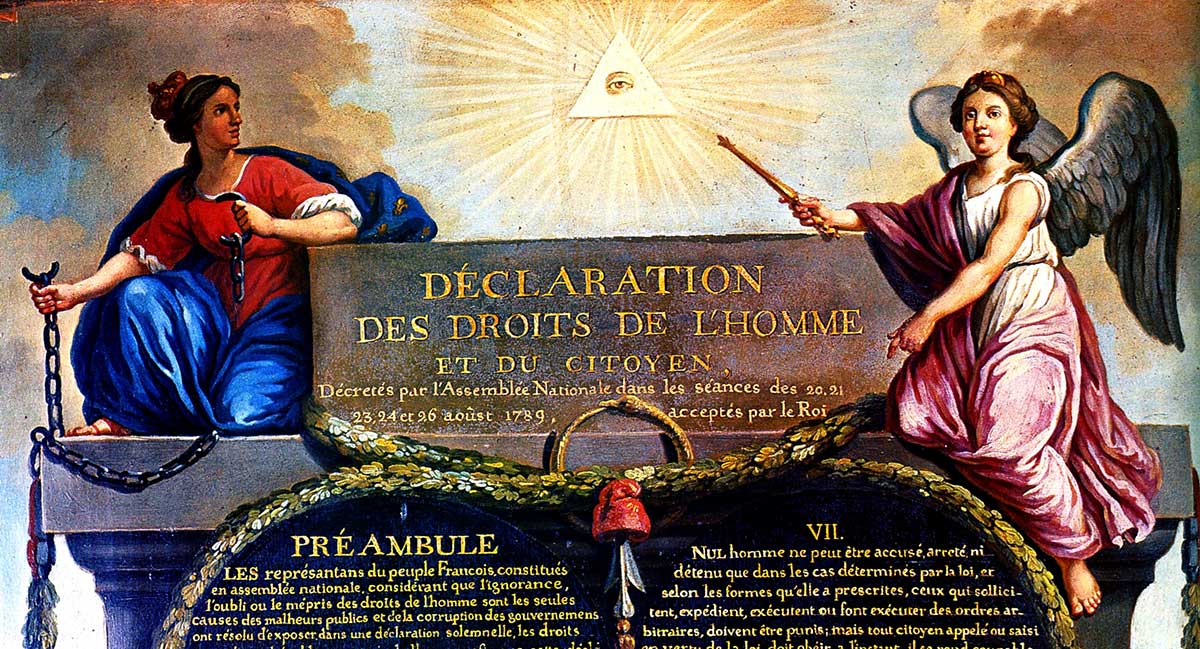
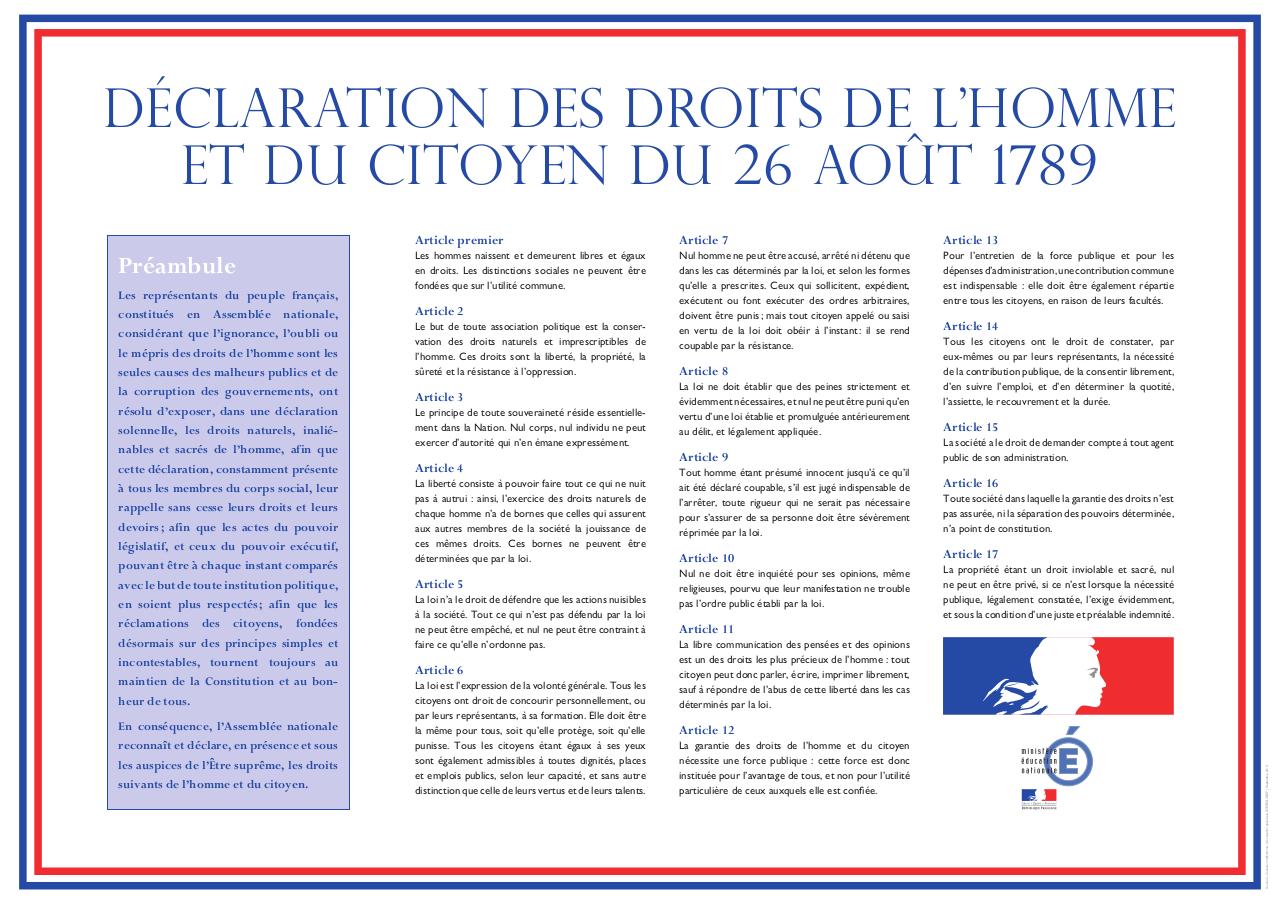
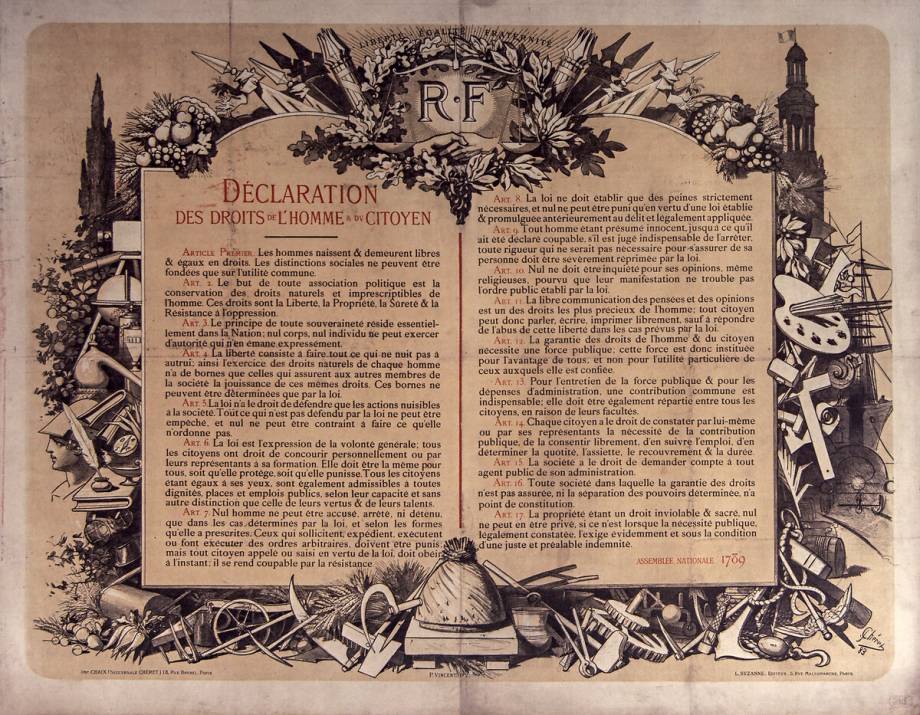
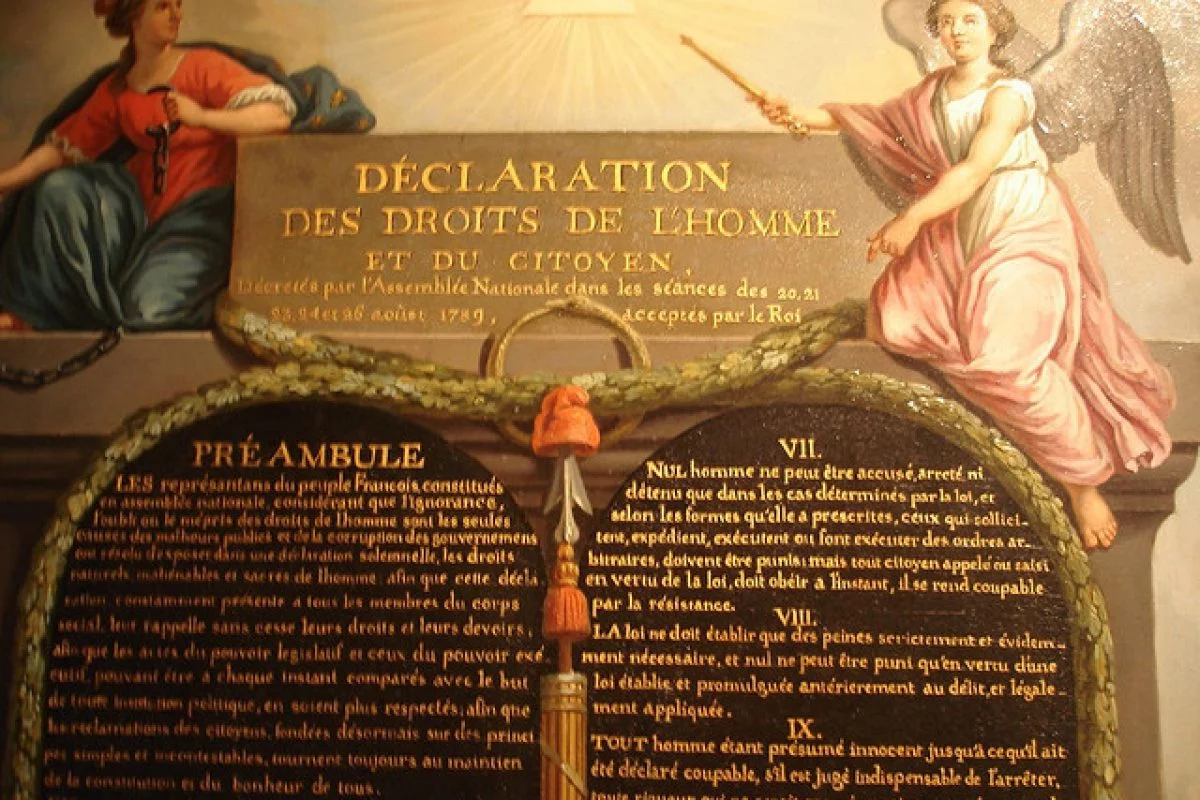
That’s when you realize, even in the 21st century, the ideas that sparked revolutions – the whole “people having rights” thing – are still pretty relevant. I mean, Bernard aside, most of us kinda take these things for granted now. But where did these ideas come from? Buckle up, because we’re about to dive into a really important piece of paper: the Déclaration des Droits de l’Homme et du Citoyen (Declaration of the Rights of Man and of the Citizen) from 1789.
What’s the Big Deal?
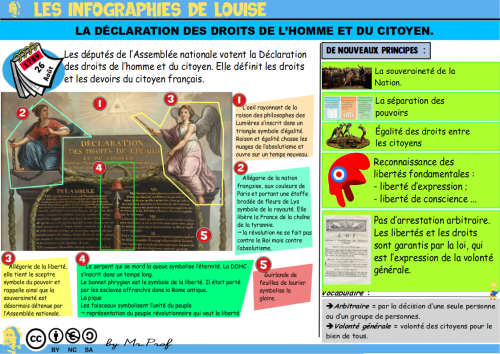
Seriously, this document is a HUGE deal. It basically laid the foundation for modern human rights. Think of it as the French Revolution’s “mission statement.” It came about during a time when France was… well, a mess. King Louis XVI was living the high life (while everyone else was, you know, starving), and people were not happy. So, they decided to, uh, shake things up a bit.
The Déclaration wasn’t just about overthrowing the King (although, spoiler alert, that did happen). It was about establishing a new order based on principles like liberty, equality, and fraternity. Sounds familiar, right? That’s because these ideas are still at the heart of many democracies today.
Let’s break it down, shall we?

Key Principles: The Nitty-Gritty
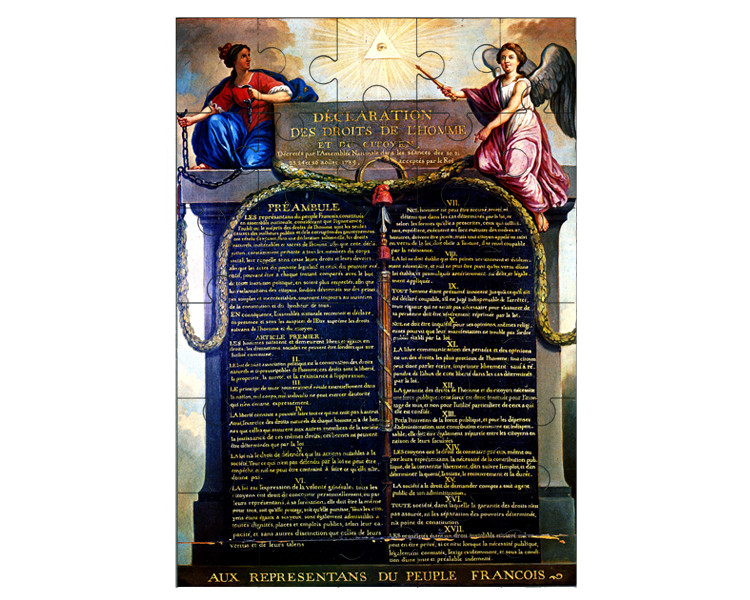
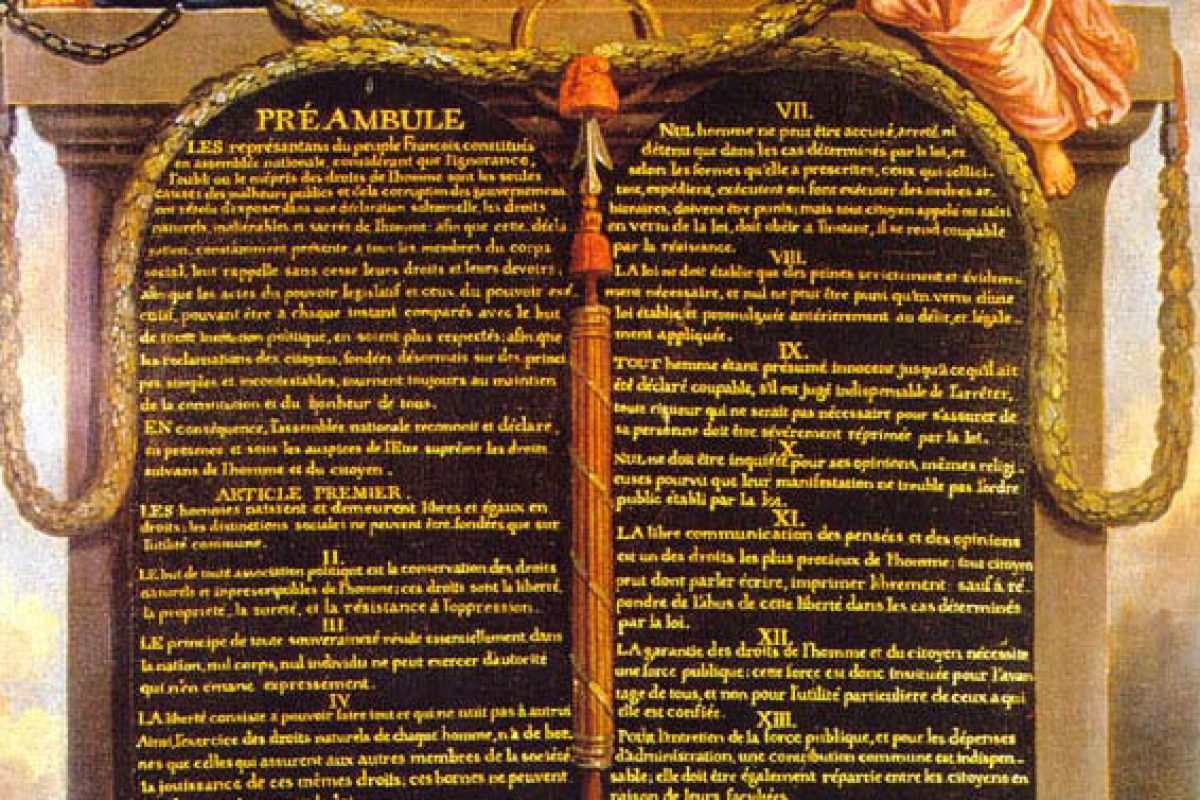
The Déclaration isn’t exactly a light read (it’s old French, after all), but the core ideas are surprisingly straightforward.
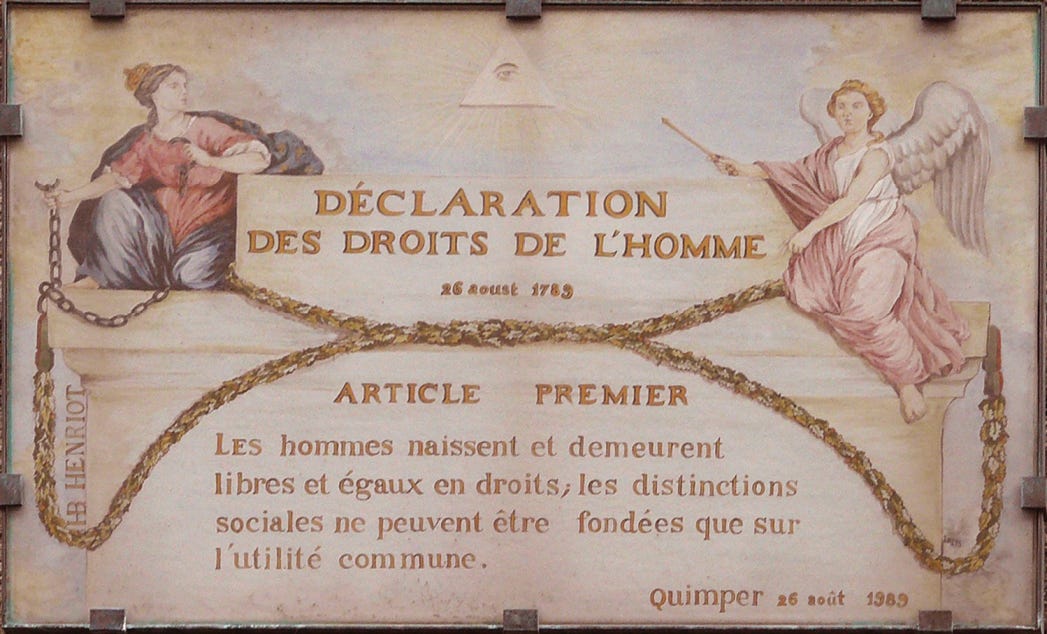
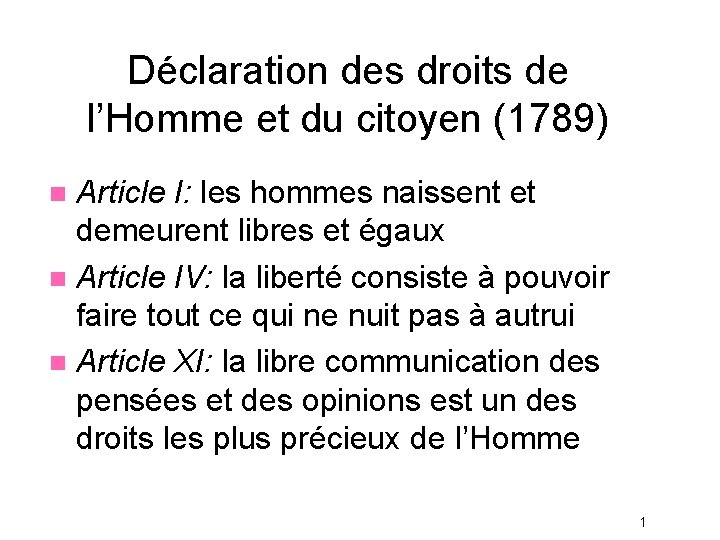
- Men are born and remain free and equal in rights. (Article 1) This sounds simple, but it was a radical statement back then. No more divine right of kings, no more hereditary privilege. Everyone starts on an equal footing. Everyone.
- The aim of all political association is the preservation of the natural and imprescriptible rights of man. These rights are liberty, property, security, and resistance to oppression. (Article 2) See? Liberty, property, security – the building blocks of a just society. And, crucially, the right to resist oppression. Because, you know, sometimes you gotta fight for your rights.
- The principle of all sovereignty resides essentially in the nation. No body nor individual may exercise any authority which does not proceed directly from the nation. (Article 3) Translation: power belongs to the people, not to some dude wearing a crown. Democracy 101.
- Liberty consists in being able to do anything that does not harm others; thus, the exercise of the natural rights of each man has no limits other than those that assure to the other members of society the enjoyment of these same rights. These limits can only be determined by the law. (Article 4) Your freedom ends where mine begins. It’s a delicate balance, but essential for a functioning society. It’s like saying you have the freedom to swing your fist, but not into someone else’s face.
- The law has the right to forbid only those actions that are injurious to society. Nothing that is not forbidden by the law can be prevented, and no one can be constrained to do what the law does not order. (Article 5) The law should be clear, and shouldn’t be used to arbitrarily restrict people’s actions. (Looking at you, excessive regulations!)
- The law is the expression of the general will. All citizens have the right to participate personally, or through their representatives, in its formation. It must be the same for all, whether it protects or punishes. (Article 6) Everyone gets a seat at the table (or at least a representative). And the law applies equally to everyone, rich or poor, powerful or not.
- No man can be accused, arrested, or detained, except in the cases determined by the law and according to the forms it has prescribed. (Article 7) This is huge. It basically says that you can’t just be thrown in jail on a whim. There have to be laws, due process, and all that jazz. A fair trial, imagine that!
- The law ought to establish only penalties that are strictly and evidently necessary, and no one can be punished except by virtue of a law established and promulgated prior to the offense and legally applied. (Article 8) Punishment should fit the crime, and you can’t be punished for something that wasn’t illegal when you did it. It’s all about fairness and predictability.
- Every man being presumed innocent until he has been declared guilty, if it is judged indispensable to arrest him, all rigor that may not be necessary to secure his person ought to be severely repressed by the law. (Article 9) Innocent until proven guilty. This is a cornerstone of modern legal systems. And, even if you are arrested, you shouldn’t be treated cruelly.
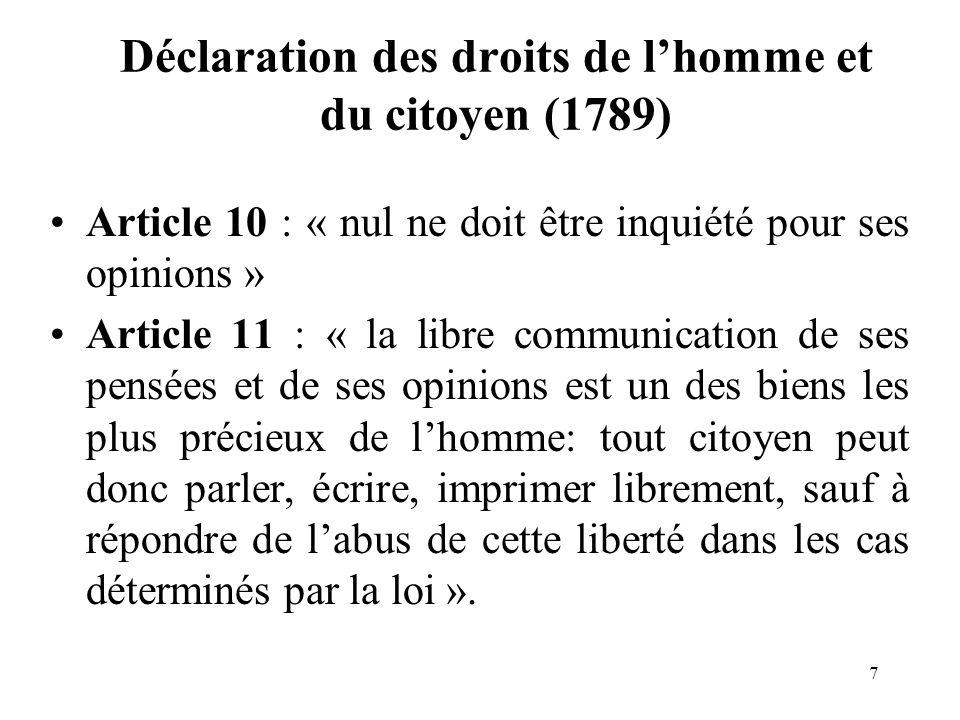
And that’s just a taste! The Déclaration goes on to cover things like freedom of opinion, freedom of religion, and the importance of property rights. It’s a comprehensive blueprint for a society based on fairness and individual liberty.
But Wait, There’s More! (The Ironic Twist)
Here’s the slightly awkward part. The Déclaration was revolutionary for its time, but it wasn’t perfect. For one thing, it was explicitly about the “Rights of Man.” Women weren’t exactly included in that original vision. Ouch.
Olympe de Gouges, a brilliant feminist writer, saw this hypocrisy and wrote her own version: the Déclaration des Droits de la Femme et de la Citoyenne (Declaration of the Rights of Woman and of the Female Citizen) in 1791. She basically took the original Déclaration and tweaked it to include women. Sadly, her efforts were… not exactly appreciated at the time. (She was eventually guillotined. History can be brutal.)
It’s a reminder that progress is rarely linear. Even documents that seem groundbreaking can have blind spots and limitations. (And that sometimes, you have to fight even harder for those who are excluded from the conversation.)
Why Should You Care Today?
Okay, so it’s a historical document. Big deal, right? Wrong. The Déclaration des Droits de l’Homme et du Citoyen continues to influence legal systems and human rights movements around the world. It’s a testament to the enduring power of ideas and the ongoing struggle for a more just and equitable society. Think about it:
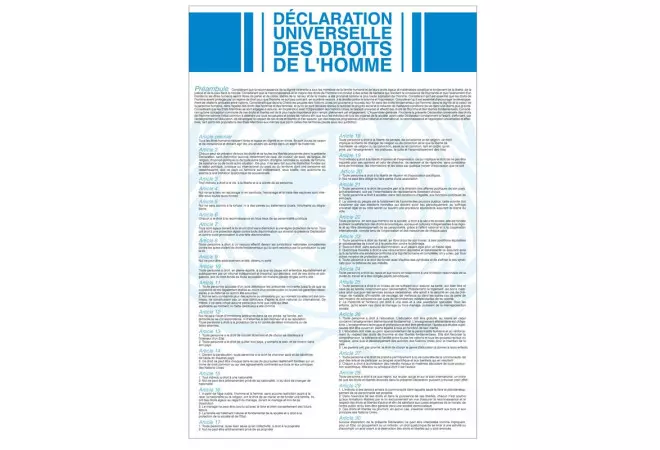
- It inspired the Universal Declaration of Human Rights (UDHR) in 1948. You know, the one that the UN adopted after World War II? Yeah, that was heavily influenced by the French Revolution’s declaration.
- It’s a reminder that rights aren’t guaranteed. They have to be constantly defended and re-evaluated. Complacency is the enemy of freedom.
- It highlights the importance of civic engagement. If you want a just society, you have to participate in shaping it. Vote, protest, write letters to your elected officials – do something!
So, next time you hear someone talking about human rights, remember the Déclaration des Droits de l’Homme et du Citoyen. It’s a foundational document that helped shape the world we live in today. And maybe, just maybe, it can inspire you to make that world a little bit better.
And if you happen to find yourself at a dinner party with Uncle Bernard, you can politely (or not so politely) remind him that even monarchies eventually have to answer to the principles of liberty, equality, and fraternity. Just maybe avoid the red wine incident this time, okay?