Okay, so picture this: I’m at a café in Paris, trying to order a pain au chocolat (as one does). My French, let’s just say, is still a “work in progress.” I fumbled around, mixing up tenses, conjugations, the whole shebang. The barista, bless her patient soul, just smiled and said, “Ah, vous tenez à votre pain au chocolat!” And it hit me – “tenir” is everywhere in French! Like, seriously, you can’t escape it.
It got me thinking – how well do I really know the present tense of “tenir”? And more importantly, how well do you know it? Because honestly, mastering this little verb is a game-changer for your French fluency. So, let’s dive in, shall we? Get ready for a tenuous (pun intended, sorry!) journey through the présent de l’indicatif of “tenir.”
“Tenir”: More Than Just “To Hold”
First things first, “tenir” literally means “to hold.” But it’s so much more versatile than that! Think of it as the Swiss Army knife of French verbs. It can mean “to hold,” “to keep,” “to insist,” “to be important to,” and a whole bunch of other things depending on the context. It’s a real chameleon, that “tenir.” (And, by the way, did you know it’s irregular? Just throwing that out there…)
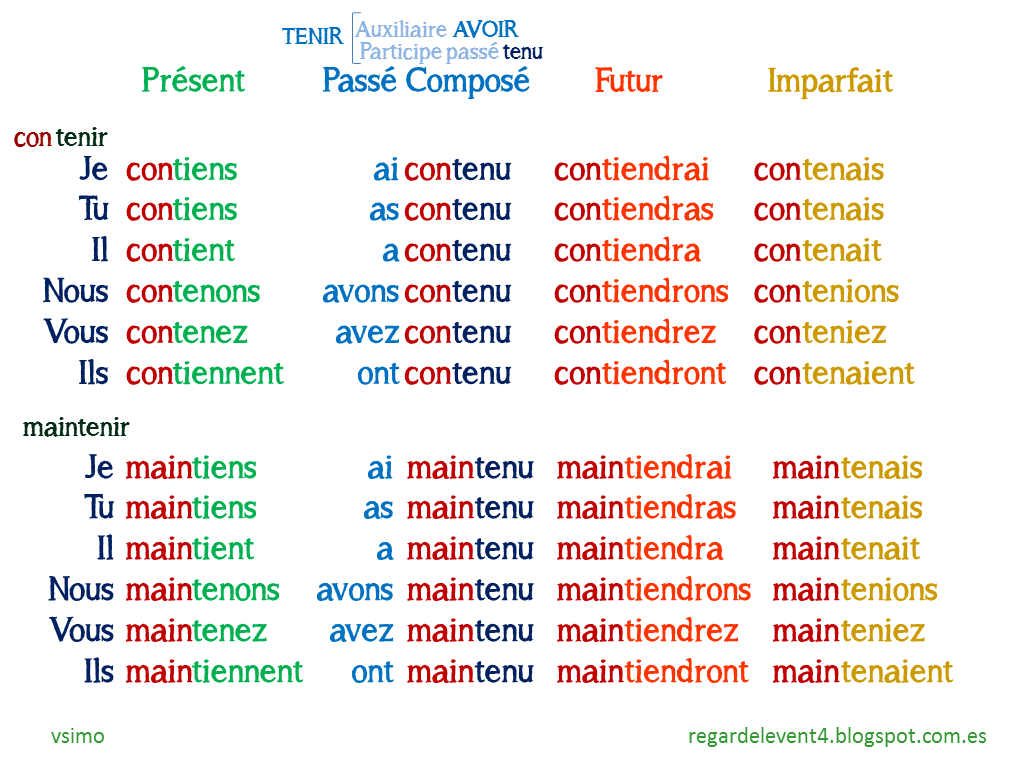
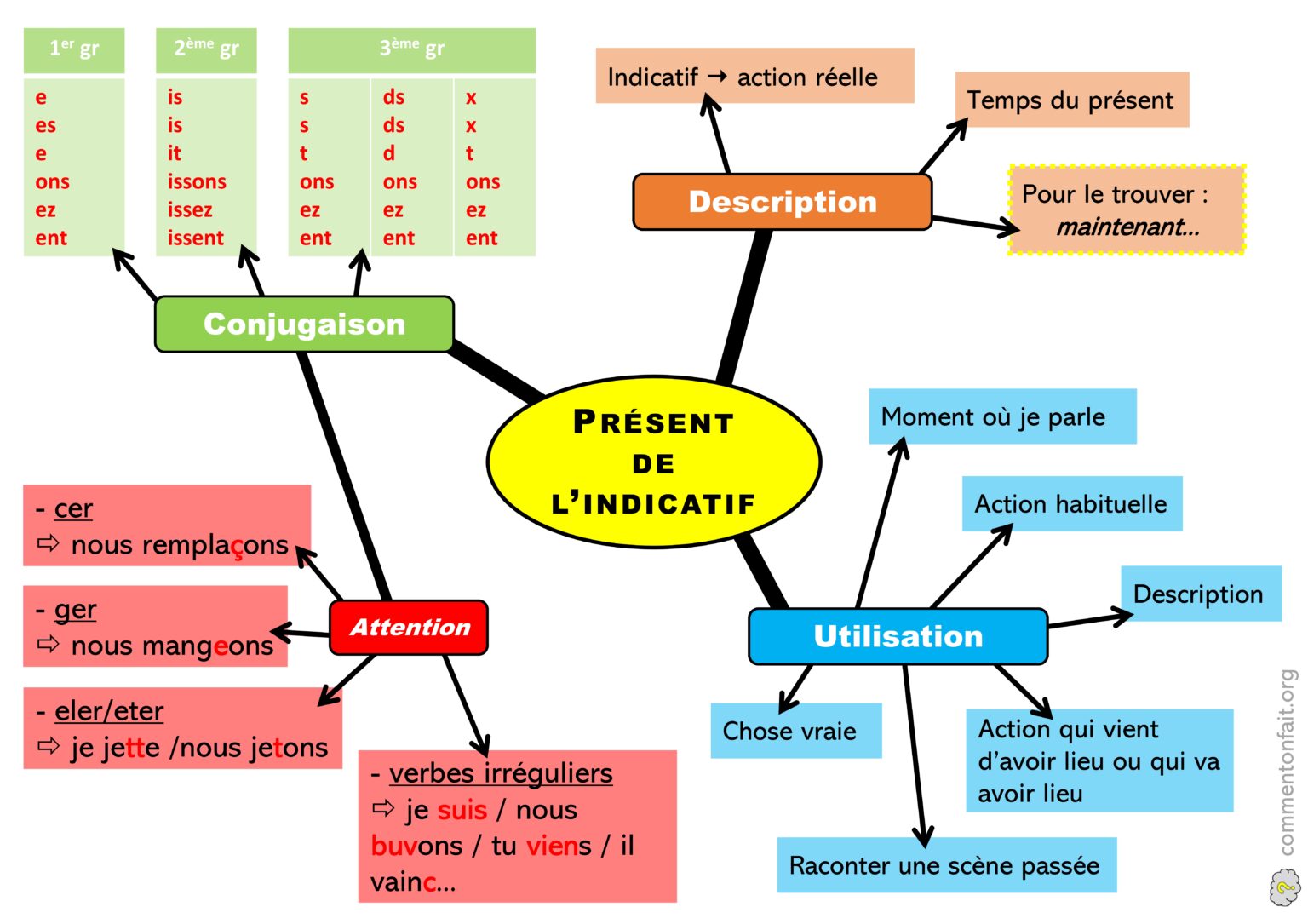
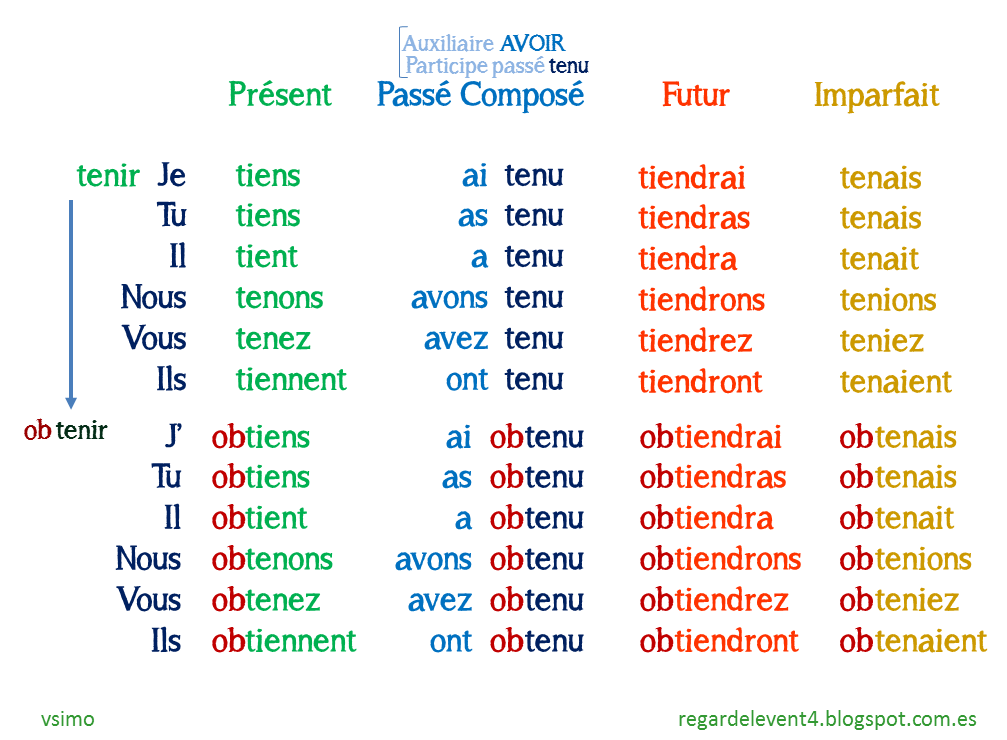
Now, let’s get down to the nitty-gritty: the présent de l’indicatif. Here’s the conjugation you absolutely need to know:
- Je tiens (I hold, I am holding, I keep, etc.)
- Tu tiens (You hold, you are holding, you keep, etc. – informal)
- Il/Elle/On tient (He/She/One holds, is holding, keeps, etc.)
- Nous tenons (We hold, we are holding, we keep, etc.)
- Vous tenez (You hold, you are holding, you keep, etc. – formal or plural)
- Ils/Elles tiennent (They hold, they are holding, they keep, etc.)
Easy enough, right? …Right? Don’t worry if it doesn’t sink in immediately; practice makes perfect! (And maybe another pain au chocolat for motivation.)
Breaking It Down: Example Time!
Okay, let’s see “tenir” in action. This is where things get really interesting (and hopefully less confusing).
- “Je tiens ce livre.” – I am holding this book. (Simple, literal meaning.)
- “Tu tiens à tes amis.” – You care about your friends. (Here, “tenir à” means “to care about,” “to be important to.”)
- “Il tient sa promesse.” – He keeps his promise. (Meaning “to keep” or “to honor.”)
- “Nous tenons bon!” – We are holding on! (Meaning “to persevere,” “to hang in there.”) This one’s great for encouragement!
- “Vous tenez la porte?” – Are you holding the door? (Again, a literal meaning.)
- “Ils tiennent un café.” – They run a café. (This one’s a bit trickier – “tenir” can also mean “to run” or “to manage” something.)
See how versatile it is? It’s not just about physically holding something; it’s about holding onto values, holding a position, holding a responsibility… It’s all very metaphorical, isn’t it?
“Tenir À”: The Importance of Prepositions
A lot of the magic with “tenir” happens with prepositions. The most common one you’ll see is “tenir à,” which, as we mentioned earlier, usually means “to care about” or “to be important to.”

For example:
- “Je tiens à ma famille.” – My family is important to me.
- “Il tient à son opinion.” – He sticks to his opinion (or he values his opinion).
- “Nous tenons à vous remercier.” – We want to thank you (literally, “We hold it important to thank you”). This is a more formal way to say “Nous voulons vous remercier.”
But there are other prepositions too! Keep an eye out for “tenir de” (to get something from someone, inherit a trait) and “se tenir” (to stand, to behave).
Important side note: Pay close attention to the preposition that follows “tenir” because it completely changes the meaning! It’s like adding different spices to a dish – the same base ingredient, but a totally different flavor.
Common Mistakes and How to Avoid Them
Okay, let’s talk about potential pitfalls. Because let’s be honest, learning a language is all about making mistakes and then learning from them. (And occasionally laughing at yourself.)
- Forgetting the conjugation: This is the most common mistake, especially when you’re starting out. Drill those conjugations! Write them out, say them aloud, stick them on your fridge – whatever works for you.
- Using the wrong preposition: We already touched on this, but it’s worth repeating. Double-check which preposition is needed to express the meaning you want.
- Over-reliance on literal translation: Sometimes, the English equivalent of “tenir” just doesn’t capture the nuance. Try to think in French instead of translating word-for-word.
- Not practicing enough: The more you use “tenir” in context, the more natural it will become. Try writing sentences, reading articles, or even just listening to French conversations.
Practice Makes Perfect (and a Pain au Chocolat Helps)
So, how do you actually master the present tense of “tenir”? Here are a few tips:

- Flashcards: Old-school, but effective. Write the conjugations on one side and the English translations on the other.
- Online exercises: There are tons of free websites and apps that offer conjugation practice. (Search for “conjugaison tenir présent indicatif.”)
- Read and listen: Pay attention to how “tenir” is used in books, articles, podcasts, and movies.
- Write your own sentences: Start with simple sentences and gradually increase the complexity.
- Talk to native speakers: The best way to learn is to use the language in real-life situations. (Even if it’s just ordering a pain au chocolat.)
Seriously, even just trying to use “tenir” in one sentence a day will make a difference. It’s like building a muscle; the more you use it, the stronger it gets. And the stronger your French muscles, the better you’ll be at navigating those tricky Parisian cafes.
So, there you have it – a whirlwind tour of the present tense of “tenir.” It might seem daunting at first, but with a little practice, you’ll be “tening” your own in no time! (Okay, I’ll stop with the puns now… maybe.)
Go forth and conquer, my friends! And remember, don’t tenir back – embrace the challenge and have fun with it! Bonne chance! (Good luck!)