Salut, les amis! Ever felt like your brain needed a little spring cleaning? Or maybe you’re just looking for a super fun, slightly quirky, and surprisingly useful intellectual adventure? Well, buckle up, because we’re about to dive headfirst into the wonderful world of… les temps primitifs en latin!
Yeah, yeah, I know what you’re thinking. Latin? Isn’t that, like, dead? Isn’t it just for dusty old books and those movies where everyone’s wearing togas? Au contraire, mes amis! Understanding the “primitive tenses” in Latin – or, to put it less intimidatingly, the basic building blocks of Latin verbs – is like unlocking a secret code to a whole world of linguistic fun. And who doesn’t love a good secret code?
Pourquoi le Latin, Vraiment?
Okay, valid question. Why bother with Latin at all? Well, for starters, a HUGE number of modern languages – French, Spanish, Italian, Portuguese, Romanian… the list goes on! – are directly descended from Latin. By understanding the Latin verb system, you’re essentially getting a cheat code for understanding how these languages work. Trust me, learning French verbs will feel way easier if you’ve got a basic grasp of Latin.
But it’s not just about other languages. Learning Latin also sharpens your mind. It’s like a mental workout that improves your logic, memory, and analytical skills. Think of it as the ultimate brain-training game! Plus, let’s be honest, being able to casually drop a Latin phrase into conversation? That’s just plain cool. Admit it.
Les Temps Primitifs: The Fantastic Four
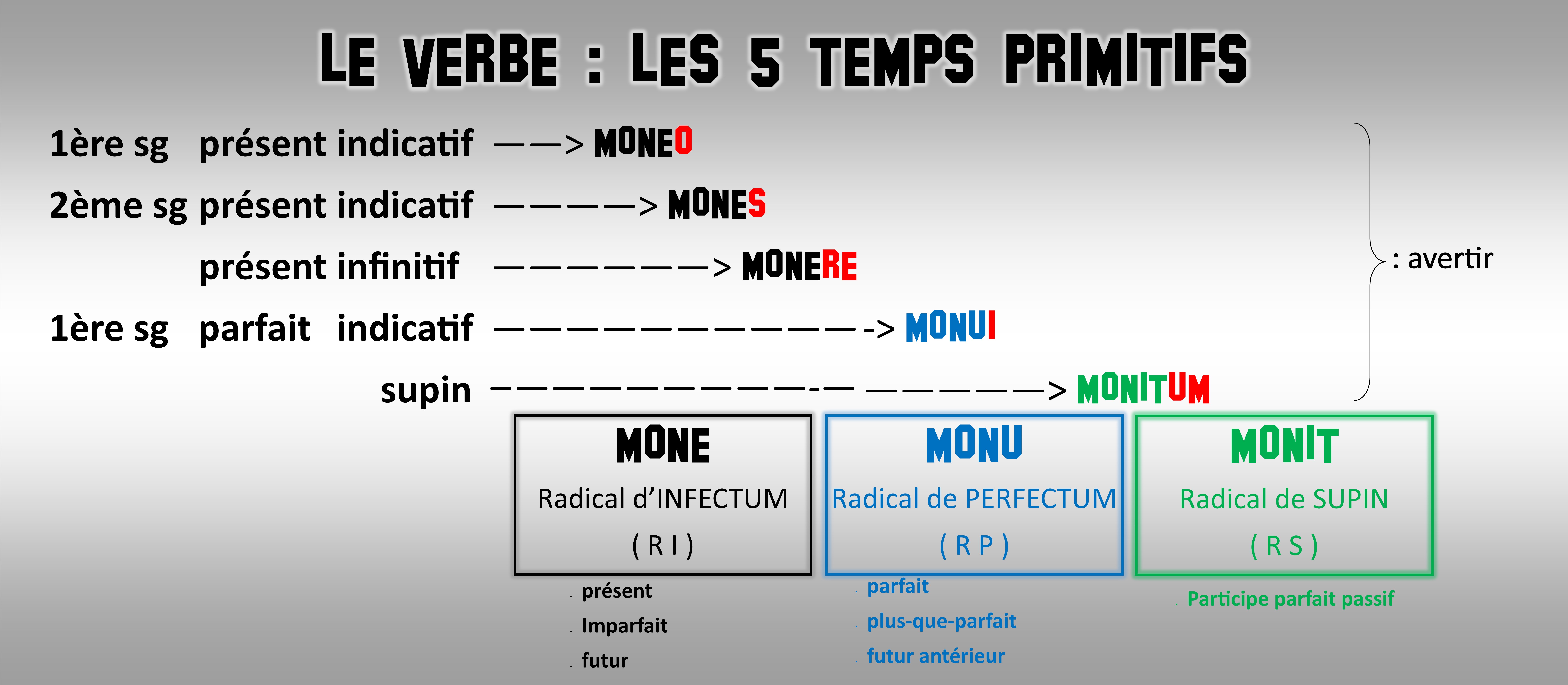
Alright, let’s get down to brass tacks. What are these “temps primitifs” we keep talking about? In Latin, there are four principal parts, or “temps primitifs,” that form the basis for almost all other verb tenses. Think of them as the foundation of a Latin verb’s house. These four parts give you all the information you need to conjugate (that is, change the form of) a verb into different tenses and moods.
1. La Première Personne du Singulier du Présent de l’Indicatif (First Person Singular Present Indicative)
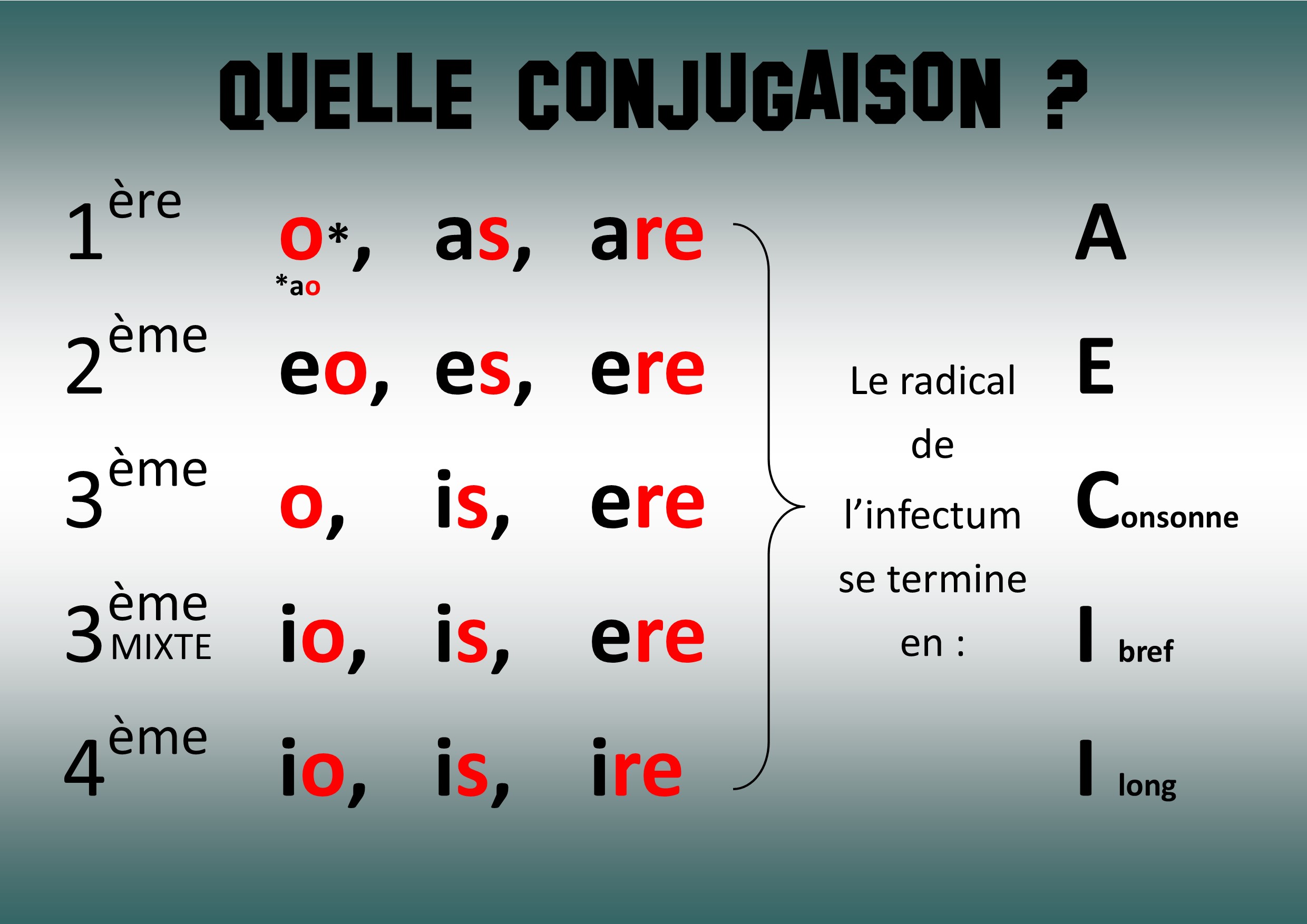
Whoa, mouthful, right? Basically, this is just the “I” form of the verb in the present tense. For example, for the verb “amare” (to love), this would be “amo” (I love). This is your starting point. This part tells you the verb’s conjugation – is it a first conjugation verb, a second conjugation verb, and so on?
Think of it like introducing yourself: “Hello, I’m ‘amo’!”

2. L’Infinitif Présent (Present Infinitive)
The infinitive is the “to” form of the verb – “to love,” “to run,” “to eat.” In Latin, this is often recognizable by the “-re” ending (although there are variations depending on the conjugation). For “amare,” the present infinitive is, well, “amare.” This tells you the entire essence of the verb.
This one is crucial because it shows you the verb’s base and confirms its conjugation pattern. Are you seeing how this is all starting to piece together? Good!
3. La Première Personne du Singulier du Parfait de l’Indicatif (First Person Singular Perfect Indicative)
This is the “I have [verbed]” form of the verb. It indicates a completed action in the past. For “amare,” this would be “amavi” (I have loved). Now, this is where things get a little more interesting! This part is essential for forming the perfect tense stem.
Notice how it sounds similar to the present, but with a little twist? That’s the magic of Latin!

4. Le Supin (Supine)
The supine is a verbal noun that’s used primarily in compound tenses and with certain verbs. For “amare,” the supine is “amatum.” It might seem a bit obscure at first, but trust me, it’s vital. The supine stem helps you form participles, which are like verbal adjectives (words that act like both verbs and adjectives).
Think of the supine as the verb’s secret weapon. It might not be used all the time, but when it is, it’s incredibly powerful.
Why These Four?
So, why these four forms specifically? Well, these four forms hold the keys to unlocking nearly every other tense and mood in Latin. They provide the stems (the basic building blocks) from which you can create all sorts of different verb forms. They’re the foundation upon which the entire Latin verb system is built.
Let’s say you know these four forms of a verb. You can then figure out how to say “I will love,” “you were loving,” “they had loved,” and so on. It’s like having a verb-conjugation superpower!
De “Amare” à l’Amour de la Langue
Okay, let’s walk through “amare” (to love) one more time to really hammer this home:
- Amo (I love) – Present Indicative, 1st person singular
- Amare (to love) – Present Infinitive
- Amavi (I have loved) – Perfect Indicative, 1st person singular
- Amatum (to love, in a specific way) – Supine
See how these four forms give you a complete picture of the verb? You know its basic meaning, its conjugation, and its past and potential uses. From these four forms, you can create all sorts of other tenses and moods. Isn’t that amazing?
It’s Not About Perfection, It’s About Exploration!
Don’t get discouraged if this seems a little overwhelming at first. Learning anything new takes time and effort. The key is to start small, be patient with yourself, and most importantly, have fun! Think of it as a puzzle to solve, a game to play.
There are tons of resources available to help you learn Latin, from textbooks and online courses to apps and games. Find what works best for you and dive in! And remember, you don’t have to become fluent in Latin overnight. Even a basic understanding of the “temps primitifs” can significantly improve your understanding of language in general.

Allez-y! Give it a Go!
So, what are you waiting for? Grab a Latin textbook, fire up Duolingo, or just start Googling. The world of Latin is waiting to be explored, and the “temps primitifs” are your passport. You might be surprised at how much you enjoy it – and how much it enhances your understanding of other languages and the world around you.
Think about it: you could be reading ancient texts in their original language, understanding the etymology of words you use every day, and impressing your friends with your newfound knowledge. Plus, learning Latin is a fantastic way to keep your brain sharp and engaged.
Who knows? You might even discover a hidden talent for linguistics! The possibilities are endless.
Alors, je vous dis, “Bonne chance!” Embrace the challenge, have fun with it, and who knows? Maybe you’ll even fall in love with Latin. It’s a beautiful language, and it has so much to offer. Go forth and conquer, mon ami! Et n’oubliez pas: “Ad astra per aspera.” (A rough road leads to the stars!)