Okay, picture this: me, desperately trying to order bibimbap in Seoul. I knew exactly how to say it (thanks, YouTube!), but the ajumma behind the counter just stared blankly. Turns out, my pronunciation was fine, but I was pointing at the menu like a total caveman. I hadn’t bothered to even glance at the Korean writing. Huge facepalm moment. That’s when I realised: knowing a few phrases is cool, but really connecting with the language? That’s a whole other level. (Anyone else ever have that “I thought I was fluent but…” moment? Share in the comments! Misery loves company, right? 😉)
So, let’s talk about Hangul – that’s the Korean alphabet. Forget complicated calligraphy and endless memorisation. Hangul is surprisingly logical and, dare I say, even… fun? Yeah, I said it. We’re going from A to Z (or rather, from ㄱ to ㅎ!) of the Korean alphabet, and I promise, by the end of this, you’ll be able to at least decipher some of those menus. Maybe even impress that ajumma. Wish me luck on my next bibimbap adventure!
Why Learn Hangul? (Besides Avoiding Embarrassing Restaurant Moments)
Seriously though, why bother learning a new alphabet? Well, besides the obvious benefits of being able to read signs, menus, and maybe even understand webtoons (Korean comics – addictive stuff, trust me!), it opens up a whole new world. Think of it as unlocking a secret level in the language learning game.
- Faster Learning: Knowing Hangul will drastically speed up your learning process. You’ll be able to read and pronounce words correctly from the get-go, instead of relying on romanisation (which is often inaccurate).
- Deeper Connection: You’ll develop a deeper connection with the language and culture. It’s like seeing the world in a new light!
- Impress Your Friends: Let’s be honest, being able to casually read Korean is pretty impressive. (Bragging rights are important, people!)
- Unlock Resources: So many learning resources are only available in Korean. Knowing Hangul unlocks a treasure trove of textbooks, websites, and apps.
(Side note: I’m not saying you NEED to learn Hangul. But trust me, you’ll want to.)
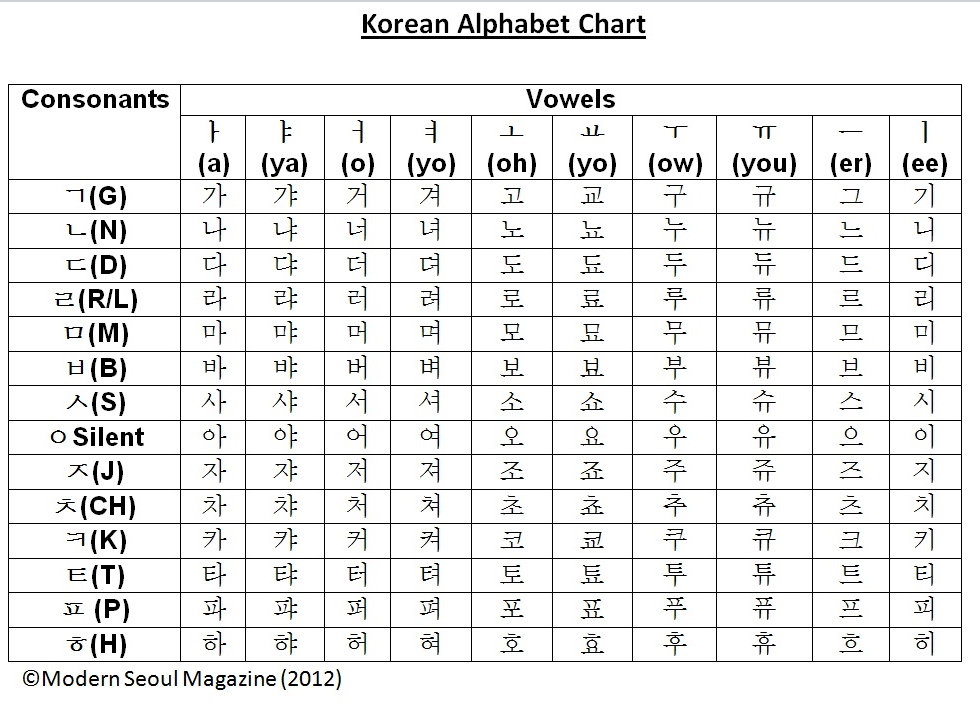
The Building Blocks: Consonants (자음 – ja-eum)
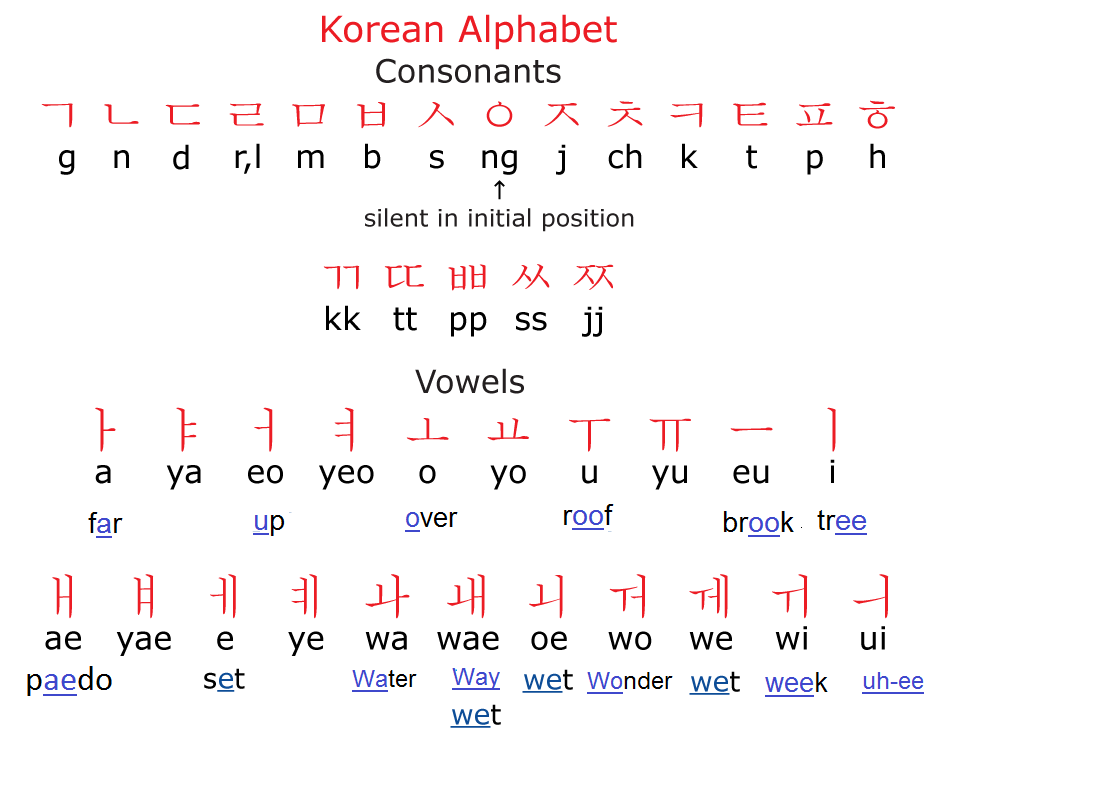
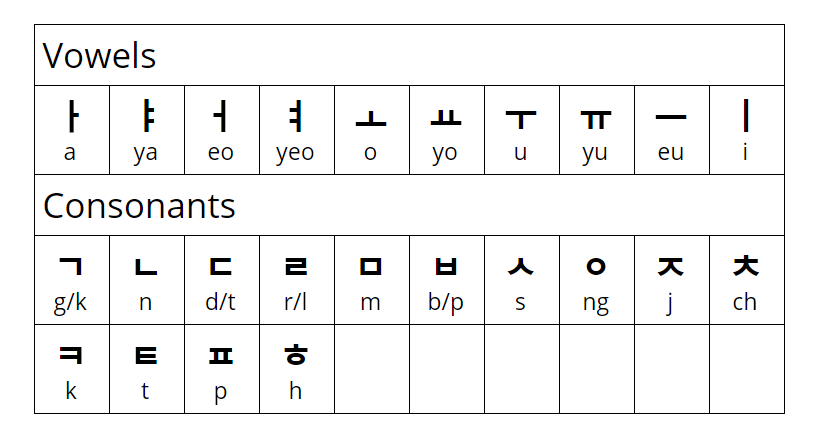
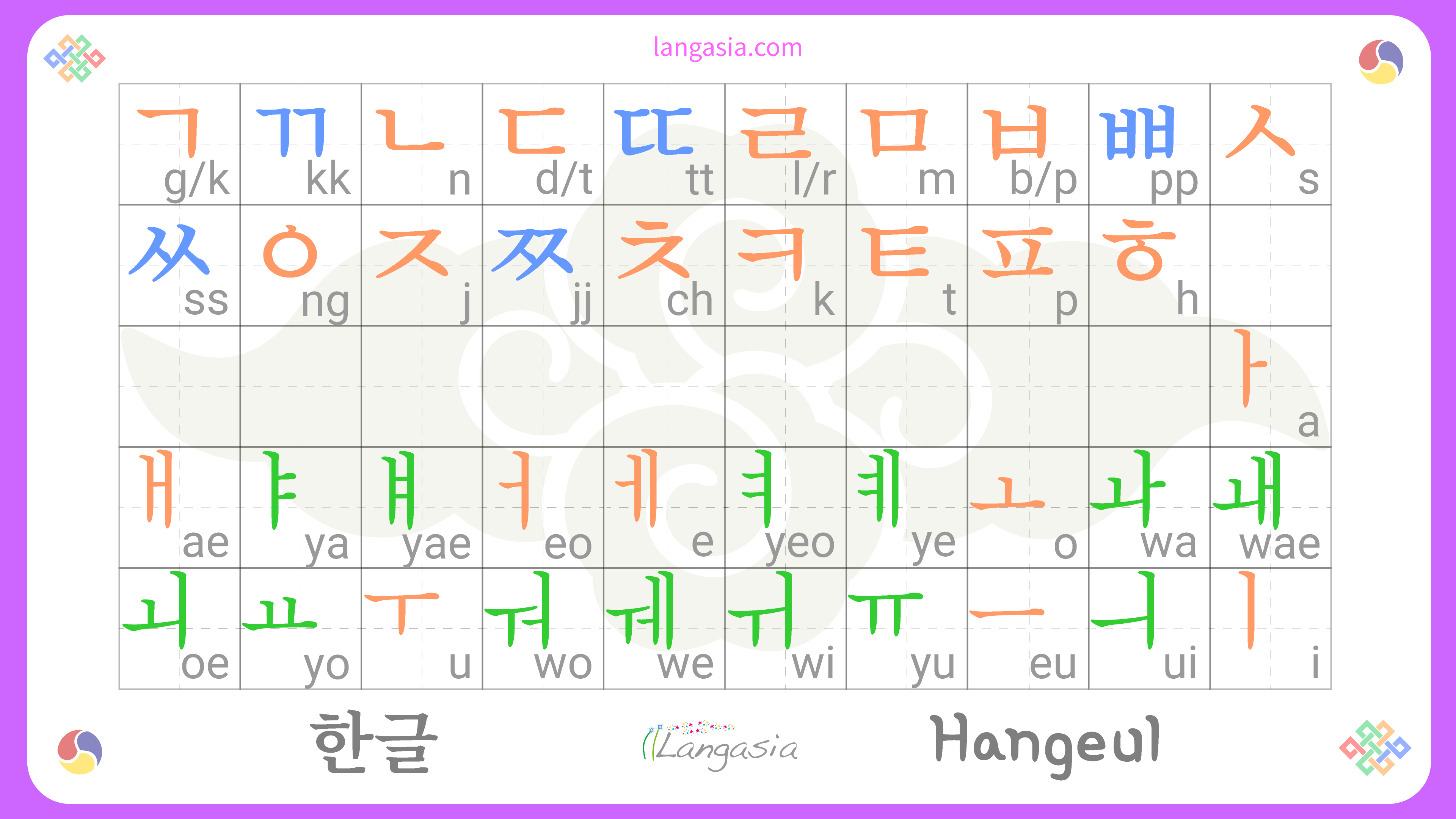
Okay, let’s dive in! Hangul has 19 consonants, and they’re grouped into basic consonants and aspirated/tense consonants. Don’t let the terminology scare you! We’ll break it down.

Basic Consonants
These are the foundation of the consonant system. They might look intimidating at first, but many of them are based on the shape of the mouth when you pronounce them! Clever, right?
- ㄱ (g/k): Pronounced like “g” in “go” or “k” in “kite,” depending on its position in the word. Think of a lowercase “L” rotated 90 degrees.
- ㄴ (n): Pronounced like “n” in “no.” Looks like a backwards “L”.
- ㄷ (d/t): Pronounced like “d” in “do” or “t” in “to.” Imagine a little “T” sitting down.
- ㄹ (r/l): This one is tricky! It’s somewhere between “r” and “l.” Think of the Spanish “pero” (but). Sometimes closer to an “r” sound, other times more like an “l.” (This will require practice!)
- ㅁ (m): Pronounced like “m” in “me.” Looks like a square.
- ㅂ (b/p): Pronounced like “b” in “boy” or “p” in “pot.” Looks like a box with a little hat.
- ㅅ (s): Pronounced like “s” in “sun.” Kinda looks like two people leaning on each other gossiping.
- ㅇ (ng/silent): This one is a wildcard. When at the beginning of a syllable, it’s silent. When at the end, it’s pronounced like “ng” in “sing.” Think of it as a zero, filling the space.
- ㅈ (j): Pronounced like “j” in “jump.” Looks like an upside-down “E”.
- ㅎ (h): Pronounced like “h” in “hat.” Looks like a little guy with a hat.
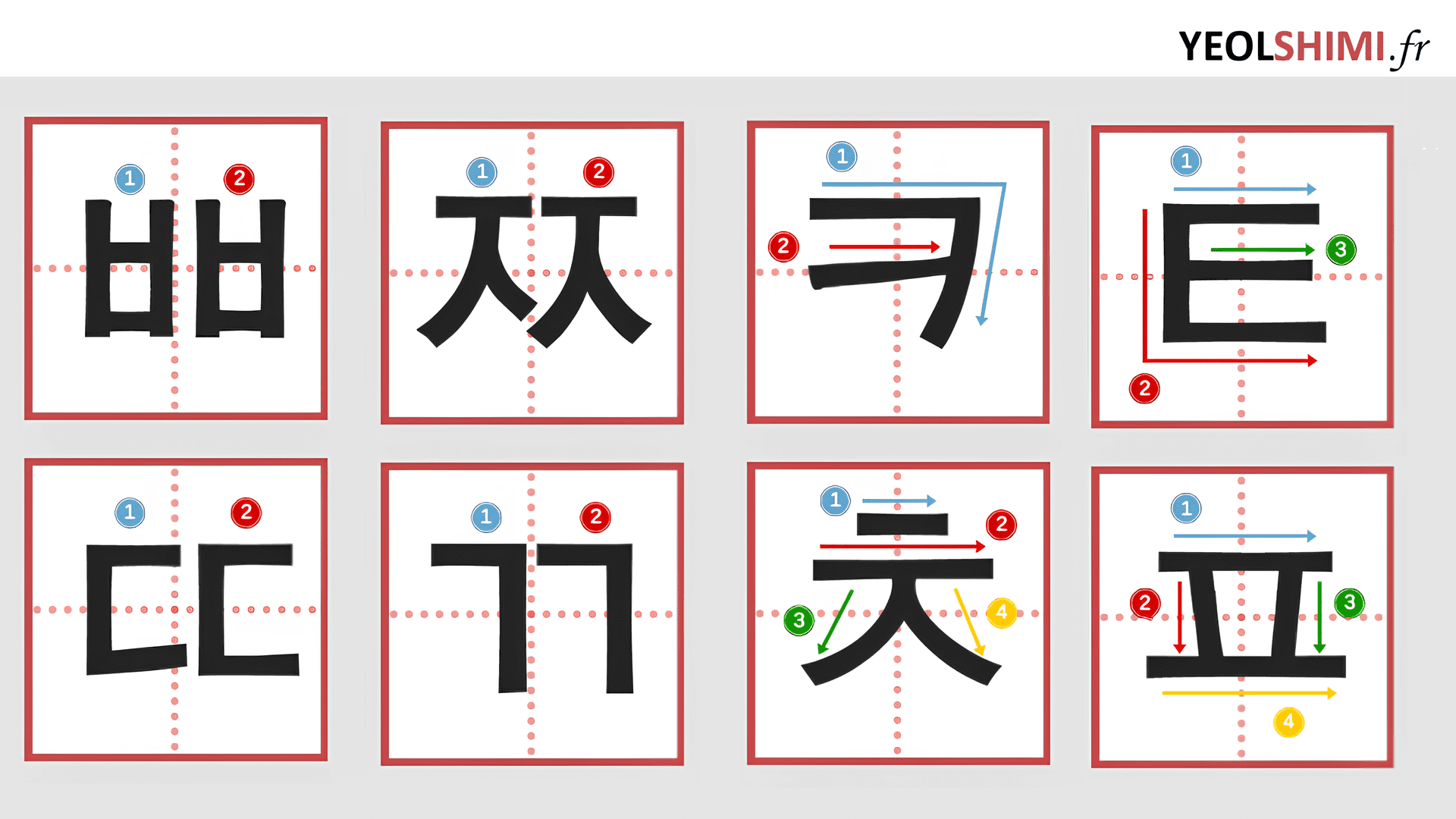
Aspirated and Tense Consonants
These are basically variations of the basic consonants, pronounced with a bit more force. Think of them as the “loud” versions.
- ㅋ (k’): Aspirated version of ㄱ. Pronounced with a puff of air, like “k” in “kite” but even more emphatic.
- ㅌ (t’): Aspirated version of ㄷ. Pronounced with a puff of air, like “t” in “top” but more forceful.
- ㅍ (p’): Aspirated version of ㅂ. Pronounced with a puff of air, like “p” in “pop” but more forceful.
- ㅊ (ch’): Aspirated version of ㅈ. Pronounced like “ch” in “chop” but with more emphasis.
- ㄲ (kk): Tense version of ㄱ. Pronounced with a stronger, tighter sound. Almost like saying “g” in “good” but holding your breath slightly.
- ㄸ (tt): Tense version of ㄷ. Pronounced with a stronger, tighter sound. Almost like saying “d” in “dog” but holding your breath slightly.
- ㅃ (pp): Tense version of ㅂ. Pronounced with a stronger, tighter sound. Almost like saying “b” in “book” but holding your breath slightly.
- ㅆ (ss): Tense version of ㅅ. Pronounced with a stronger, tighter sound. Almost like saying “s” in “soup” but holding your breath slightly.
- ㅉ (jj): Tense version of ㅈ. Pronounced with a stronger, tighter sound. Almost like saying “j” in “jump” but holding your breath slightly.
(Pro-tip: Don’t worry too much about mastering the pronunciation of the aspirated and tense consonants right away. Focus on recognizing them visually first. You’ll get there! Rome wasn’t built in a day, and neither was your Korean pronunciation.)
The Sunshine: Vowels (모음 – mo-eum)
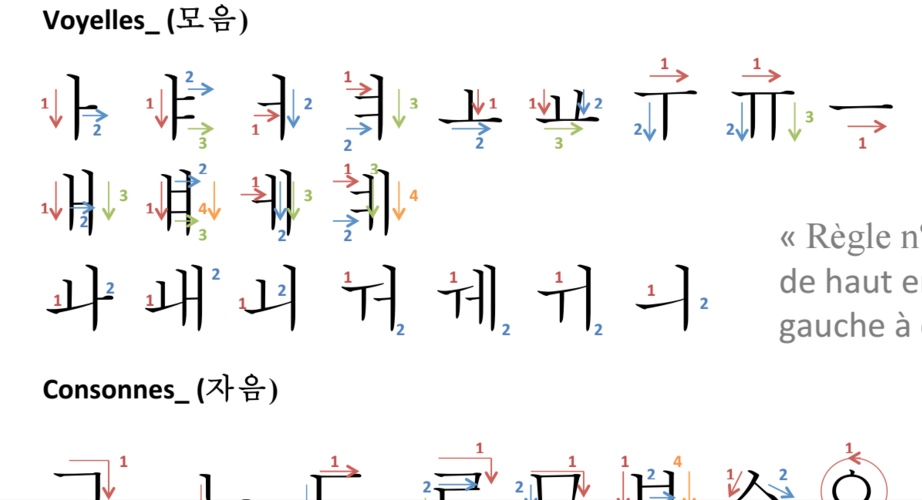
Now for the vowels! Hangul has 21 vowels, which might seem like a lot, but they’re also pretty logical. Many are combinations of basic vowel sounds.
Basic Vowels
- ㅏ (a): Pronounced like “a” in “father.”
- ㅑ (ya): Pronounced like “ya” in “yard.”
- ㅓ (eo): This one is tricky for English speakers. It’s somewhere between “o” and “u.” Think of the sound you make when you’re unsure about something: “uh…”
- ㅕ (yeo): Pronounced like “yeo” in “year” (but with a “eo” sound, so slightly different).
- ㅗ (o): Pronounced like “o” in “go.”
- ㅛ (yo): Pronounced like “yo” in “yolk.”
- ㅜ (u): Pronounced like “oo” in “moon.”
- ㅠ (yu): Pronounced like “yu” in “you.”
- ㅡ (eu): This one is also tricky. It’s a sound that doesn’t really exist in English. It’s kind of like saying “oo” in “moon” but without rounding your lips. Try saying “uh…” and then pulling your lips back into a slight smile.
- ㅣ (i): Pronounced like “ee” in “see.”
Diphthongs (Combined Vowels)
These are formed by combining the basic vowels. Don’t panic, they’re easier than they look!
- ㅐ (ae): Pronounced like “ae” in “cat.” (Same sound as ㅔ)
- ㅔ (e): Pronounced like “e” in “bed.” (Same sound as ㅐ)
- ㅚ (oe): Pronounced like “wae”, almost like “weh”.
- ㅟ (wi): Pronounced like “wee” in “wheel.”
- ㅢ (ui): Can be pronounced in a few ways, depending on the word: like “eu-i,” “ee,” or even silent!
- ㅘ (wa): Pronounced like “wa” in “water.”
- ㅝ (wo): Pronounced like “wo” in “wonder.”
- ㅙ (wae): Pronounced like “wae” in “wait.”
- ㅞ (we): Pronounced like “we” in “wet.”
- ㅘ (wa): Pronounced like “wa” in “water.”
- ㅙ (wae): Pronounced like “wae” in “wait.”
(Okay, I know what you’re thinking: “This is a lot of vowels!” Take a deep breath. Focus on the basic vowels first, and the diphthongs will come naturally with practice. Think of it as collecting Pokemon. Gotta catch ’em all!)

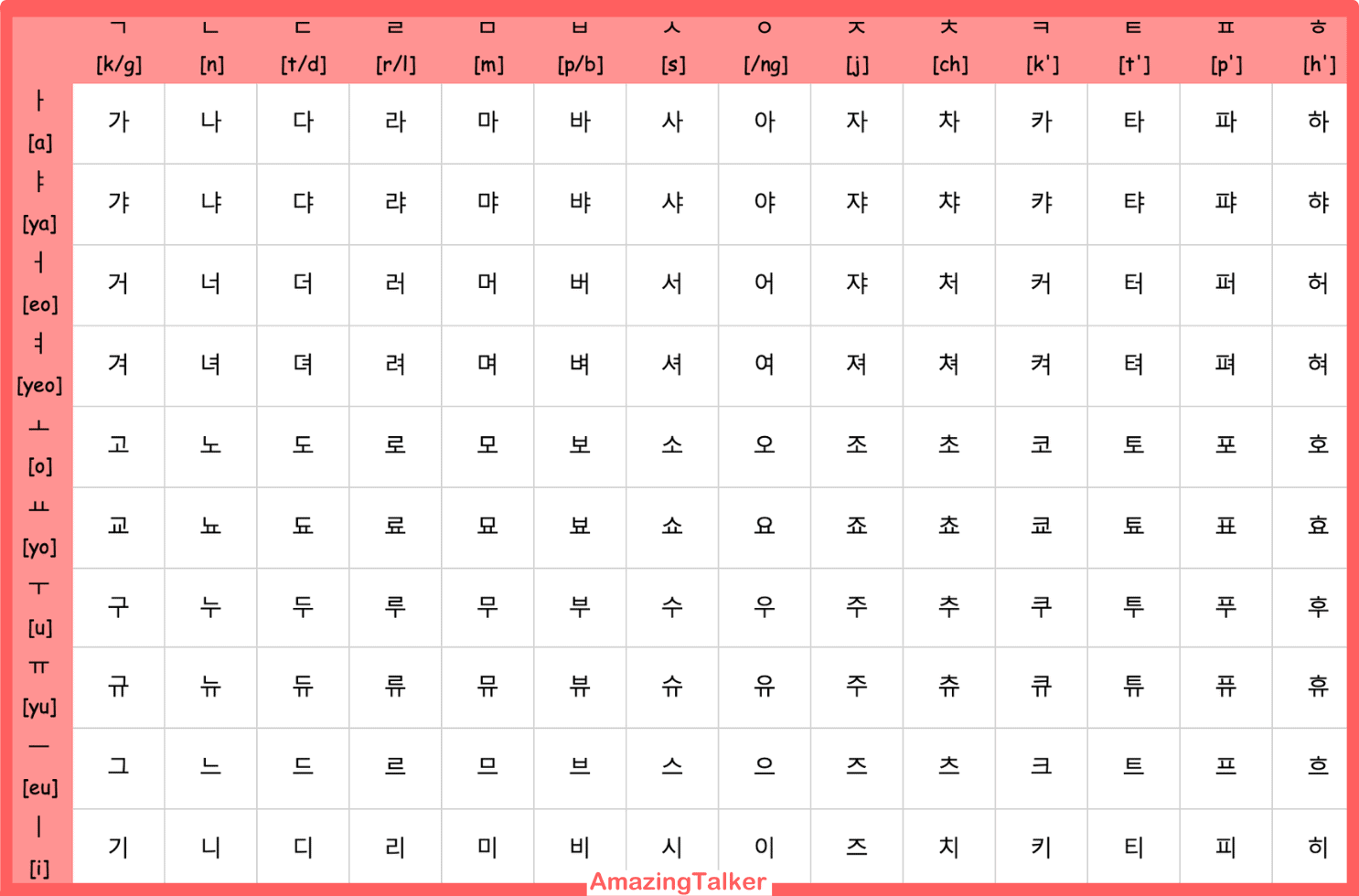
Putting it All Together: Syllable Structure
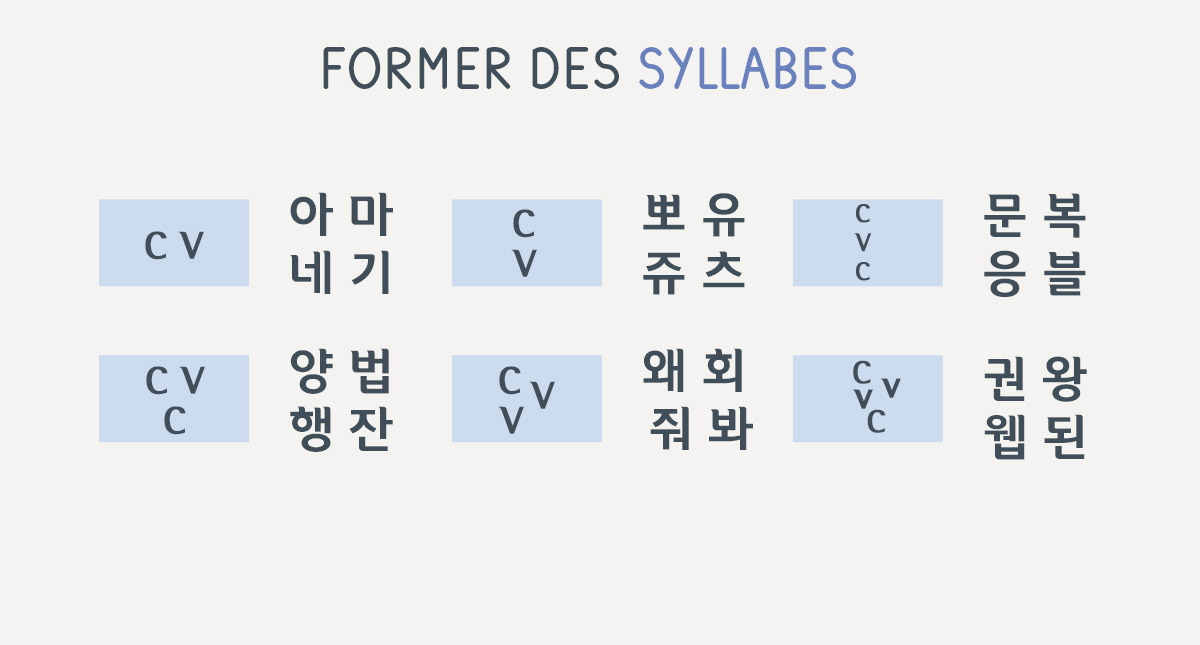
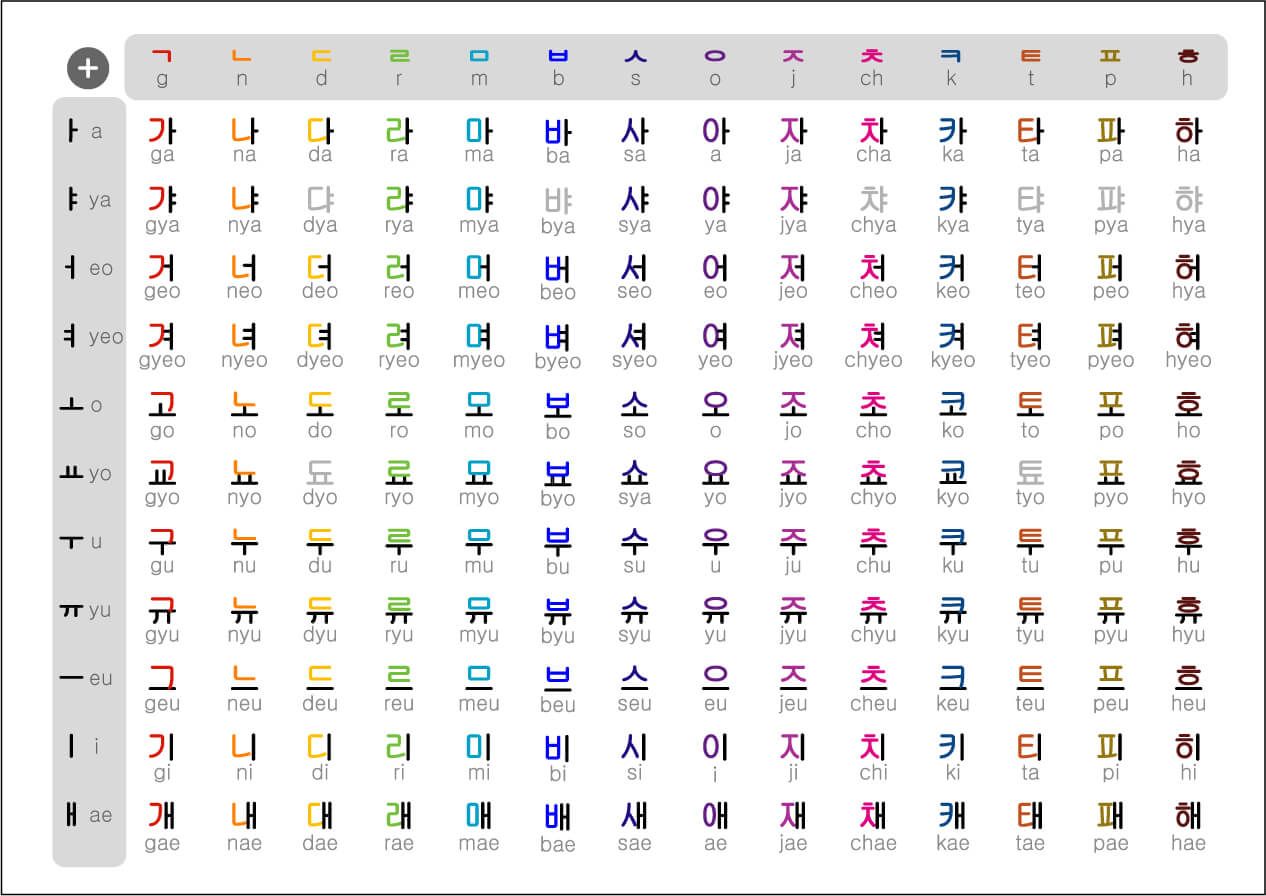
Hangul is written in syllables, and each syllable is composed of at least one consonant and one vowel. The syllables are arranged in blocks, which makes them visually distinct and easy to read. The most common syllable structure is consonant-vowel (CV), but there are also structures like consonant-vowel-consonant (CVC) and consonant-vowel-vowel (CVV).
Here are a few examples:
- 가 (ga): ㄱ (g) + ㅏ (a)
- 나 (na): ㄴ (n) + ㅏ (a)
- 밥 (bap): ㅂ (b) + ㅏ (a) + ㅂ (p)
- 곰 (gom): ㄱ (g) + ㅗ (o) + ㅁ (m)
(See? It’s like building with Lego bricks! You just snap the consonants and vowels together to create words.)
Tips and Tricks for Learning Hangul
Ready to start your Hangul journey? Here are a few tips to help you along the way:
- Use Flashcards: Old-school, but effective! Write the Hangul character on one side and the pronunciation and meaning on the other. (Quizlet is your friend!)
- Practice Regularly: Even just 15 minutes a day can make a huge difference.
- Read Korean Everything: Street signs, menus, song lyrics… anything you can get your hands on.
- Use Online Resources: There are tons of free websites and apps that can help you learn Hangul. (Talk To Me In Korean is a great place to start!)
- Don’t Be Afraid to Make Mistakes: Everyone makes mistakes when they’re learning a new language. The important thing is to keep practicing!
- Find a Study Buddy: Learning with a friend can make the process more fun and motivating.
- Reward Yourself: Treat yourself to some Korean snacks or watch your favorite K-drama after each study session. (Motivation is key!)
(And remember, be patient with yourself! Learning a new alphabet takes time and effort. Don’t get discouraged if you don’t master it overnight. Just keep practicing, and you’ll get there eventually.)
From Zero to Hero (Almost!)
So, there you have it – the Korean alphabet from A to Z (or rather, ㄱ to ㅎ!). You might not be fluent just yet, but you now have the foundation you need to start reading and writing in Korean. Go forth and conquer those menus, webtoons, and K-dramas! (And don’t forget to practice your pronunciation – that bibimbap isn’t going to order itself!) And remember, practice makes perfect. Keep at it, and soon you’ll be reading Korean like a pro. Until then, 화이팅! (Hwaiting! – Fighting! – Good luck!)